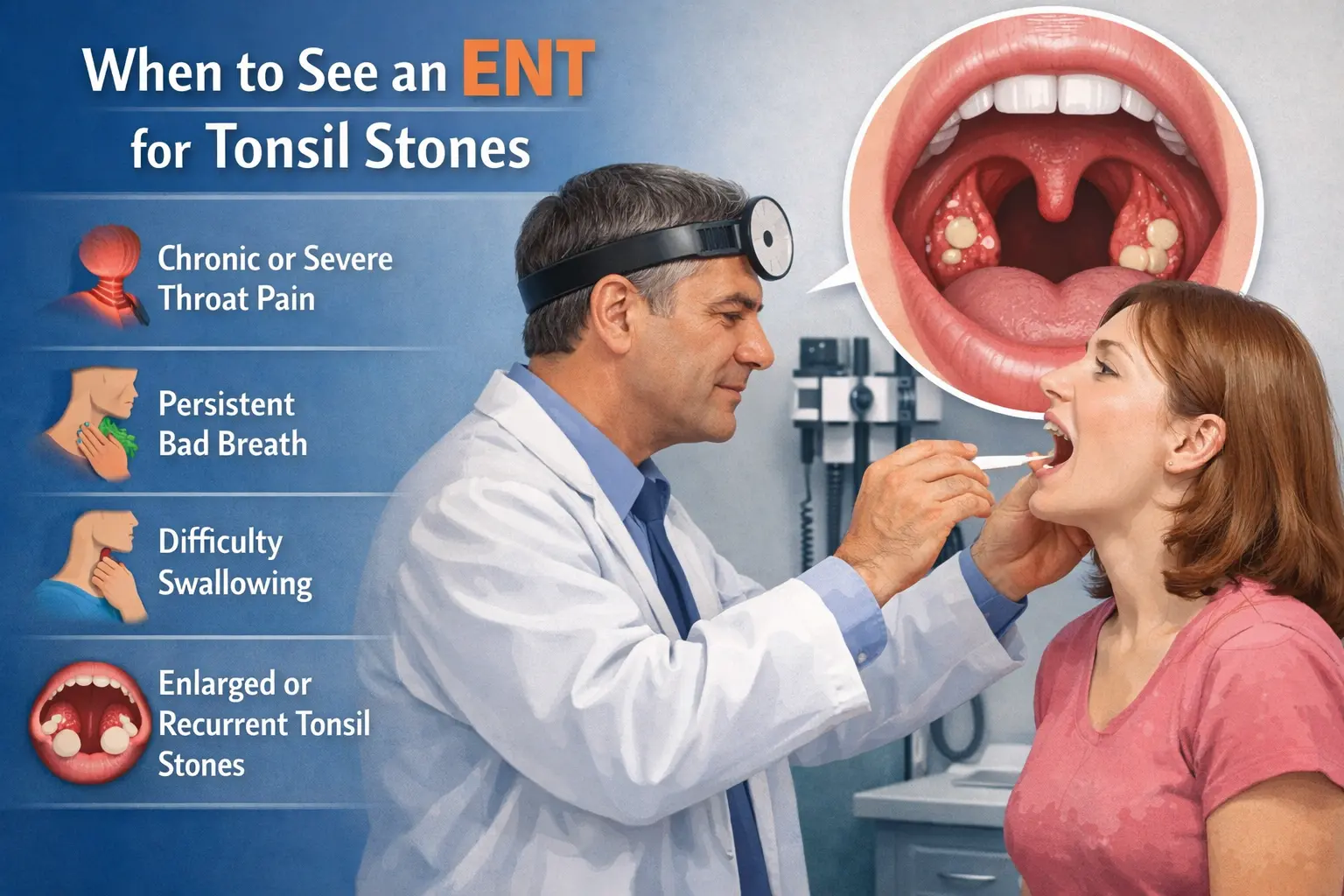
When to See an ENT for Tonsil Stones: Signs You Need Professional Treatment
Most tonsil stones are annoying—but not dangerous. The problem is when they keep coming back, cause constant symptoms, or start to look like something more serious (infection, abscess, or another condition).
Here’s exactly when it’s time to stop guessing and see an ENT, what they can do, and which warning signs mean you should be checked quickly.
First: what an ENT actually helps with
An ENT (Ear, Nose & Throat specialist) can:
- Confirm it’s tonsil stones vs infection vs reflux/post-nasal drip
- Look deeper than you can (stones can hide in crypts)
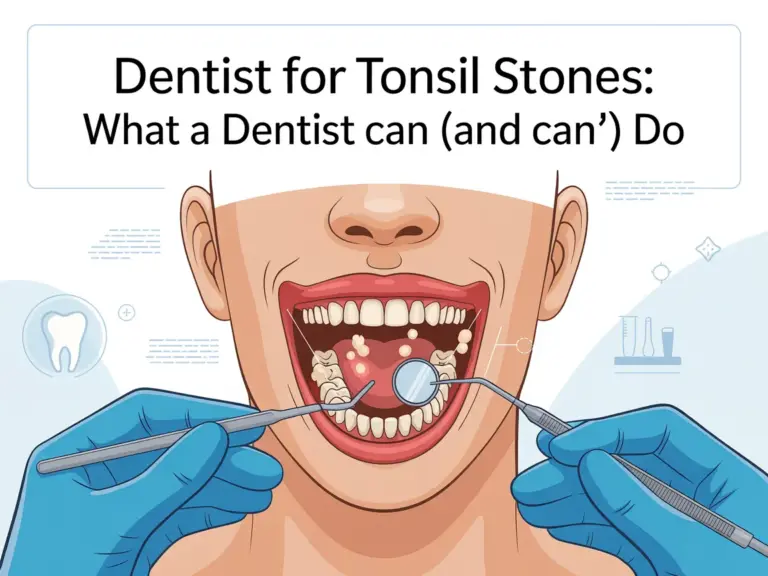
- Remove stubborn stones safely
- Treat the underlying tonsil issues (chronic inflammation, deep crypts)
- Discuss longer-term options if stones are frequent or severe
You should see an ENT if any of these are true
1) Stones keep coming back (recurrent)
If you’re dealing with stones:
- Weekly
- Or every month
- Or you’re always feeling symptoms even when you can’t see a stone
…that’s a strong reason to see an ENT.
Why: recurrent stones often mean deep crypts + ongoing inflammation, and the ENT can discuss prevention and long-term solutions.
2) Bad breath is persistent and affects your life
See an ENT if:
- You have chronic halitosis that returns fast after brushing
- You’ve already ruled out obvious dental issues (gums, cavities)
- It’s affecting confidence, work, or relationships
Why: tonsil stones are a common hidden cause of stubborn bad breath, and an ENT can confirm the source and reduce recurrence.
3) Constant “something stuck” feeling or throat irritation
If you have ongoing:
- Lump-in-throat feeling (globus)
- Throat clearing
- Sore throat that comes back
- One-sided throat irritation
…especially for more than 2–3 weeks, get evaluated.
Why: stones can cause irritation—but reflux (LPR/GERD) and post-nasal drip can mimic it. ENT helps separate the causes.
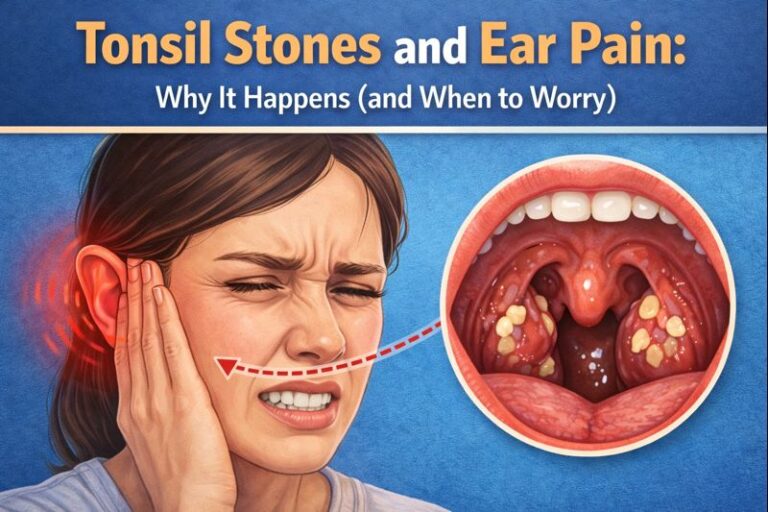
4) Ear pain keeps returning (with normal ear exams)
If you repeatedly get:
- One-sided earache/pressure
- Ear pain that happens together with throat/tonsil symptoms
An ENT visit is smart.
Why: referred pain from tonsils is real, but persistent ear pain should be assessed.
5) You get tonsillitis often
If you’re getting:
- Frequent sore throats with swollen tonsils
- Repeated infections or antibiotics
…stones may be part of a bigger chronic-tonsil problem.
Why: recurrent tonsillitis can enlarge crypts and make stones worse.
6) You’re bleeding, getting injured, or “digging” often
If you’ve tried removing stones and you get:
- Bleeding
- Significant pain
- Swollen tonsils afterward
- Worse symptoms after attempts
Stop the self-removal routine and see an ENT.
Why: repeated trauma can inflame tonsils, deepen crypts, and increase recurrence.
7) You have a large stone that won’t come out (or feels deep)
If a stone seems:
- Large and stuck
- Deep inside crypts
- Causing major swallowing discomfort
ENT removal is safer than aggressive home attempts.
Red flags: get checked urgently (same day / urgent care)
These are not “wait and see” situations:
- Trouble breathing
- Drooling or can’t swallow fluids
- Severe one-sided throat pain + swelling
- Muffled “hot potato” voice
- High fever and you feel very sick
- Neck swelling/lump that’s growing
- Ear pain with hearing loss, drainage, dizziness
- You suspect an abscess (severe pain, one-sided swelling, jaw opening difficulty)
These can signal serious infection or complications.
What “professional treatment” may look like
Depending on your case, an ENT might recommend:
1) Confirm + treat the cause
They may check for:
- Deep crypts / chronic tonsil inflammation
- Post-nasal drip (allergies/sinus)
- Reflux (LPR/GERD)
- Oral hygiene or dry mouth factors
2) In-office removal
If a stone is stubborn or deep, they can remove it safely with proper tools.
3) Longer-term solutions for frequent stones
If your stones are frequent and quality-of-life is affected, the ENT may discuss:
- Preventive routines (targeted gargles, hydration, controlling drip/reflux)
- Procedures aimed at reducing crypts in selected cases
- Tonsillectomy in severe/recurrent cases (usually when symptoms/infections are significant)
What to say at your ENT appointment (quick checklist)
Bring a simple note like:
- How often stones occur (weekly/monthly)
- Main symptoms (bad breath, globus, sore throat, ear pain)
- How long symptoms have been happening
- What you’ve tried (gargles, mouthwash, water flosser, etc.)
- Any triggers (dairy, reflux foods, allergies, dry mouth)
- Photos (if you ever captured visible stones)
Safe approach while you wait for an appointment
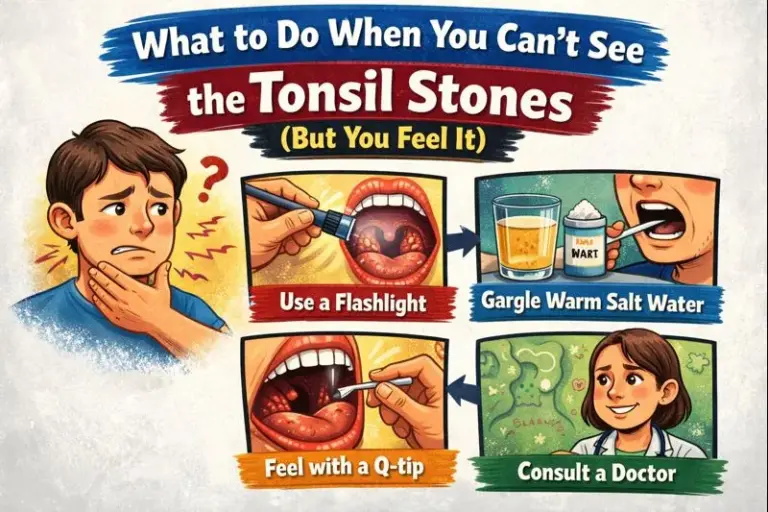
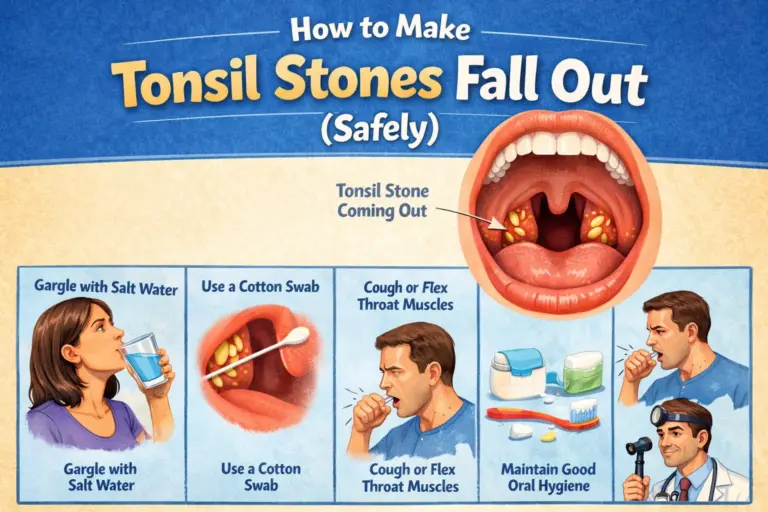
- Warm salt-water gargles (gentle)
- Hydration + humidifier if air is dry
- Brush/floss + tongue cleaning
- Avoid aggressive digging or sharp tools
- Reduce reflux triggers if you notice food-related flares
Tonsil stones can feel embarrassing and confusing — especially when bad breath or throat discomfort keeps coming back. That’s why I created the Tonsil Stones Guide eBook: first you’ll understand exactly what’s happening and which symptoms matter, then you’ll read real experiences from others, and finally you’ll get a step-by-step plan: simple home routines + helpful products, plus a clear “doctor path” explaining trusted professional treatments and when they’re considered. Download the eBook
Looking for a Structured Way to Manage Tonsil Stones?
If you want medically responsible, step-by-step guidance beyond scattered online advice, this complete guide walks you through safe removal methods, prevention strategies, and long-term management. Includes a printable 30-day tracking system.
Explore The Complete Guide → Instant digital download • Professionally designed PDF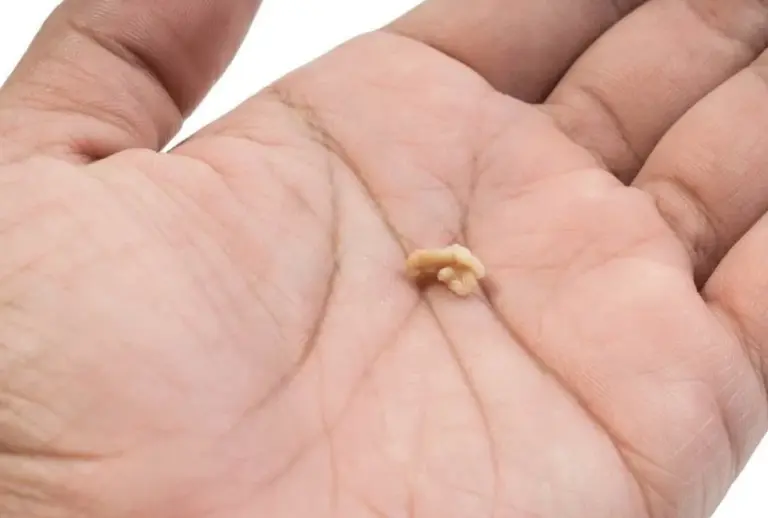
![the mystery of tonsil stones [biology]](https://tonsilstones.net/wp-content/uploads/2026/03/The-Mystery-of-Tonsil-Stones-Biology-768x512.webp "The Mystery of Tonsil Stones [Biology]")