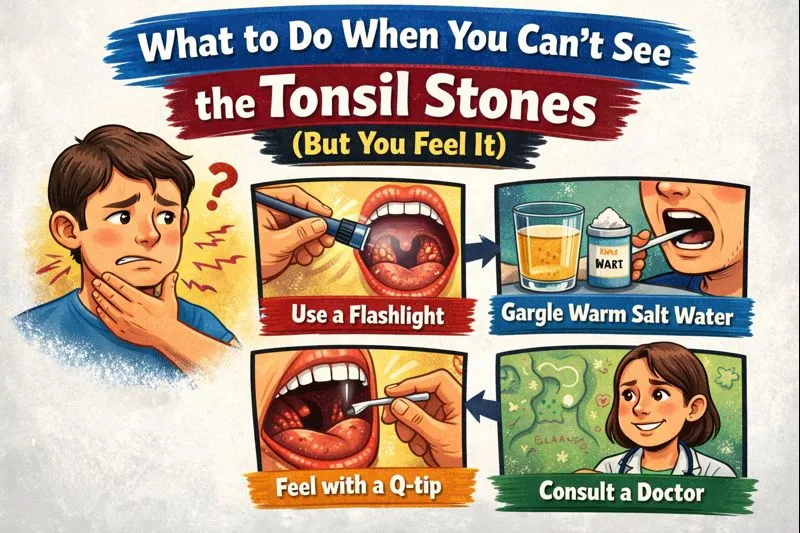
What to Do When You Can’t See the Tonsil Stones (But You Feel It)
You have the classic feeling: something stuck, a lump in the throat, mild irritation, maybe a weird taste… but when you look in the mirror? Nothing.
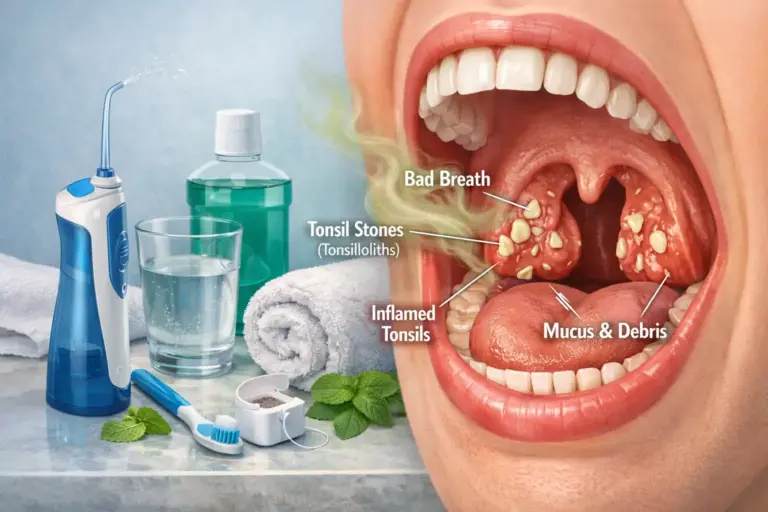
This is super common. Tonsil stones can sit deep inside tonsil crypts where you can’t see them or the sensation can be caused by something else that feels exactly the same (like reflux or post-nasal drip).
Here’s the safest plan to figure it out without making things worse.
Why you can feel a stone you can’t see
There are a few reasons:
1) It’s deep in a crypt
Small stones can be hidden behind folds of tissue. You feel the irritation, but it’s not visible yet.
2) It already loosened and moved
Sometimes the “stuck” sensation is from irritation that remains after a stone shifted or partially came out.
3) It’s not a stone (common mimics)
The biggest “fake tonsil stone” sensations are:
- Post-nasal drip (mucus sliding down the throat)
- Reflux/LPR (silent reflux can create globus)
- Swollen tonsil tissue after coughing, illness, or aggressive poking
- Dry throat (especially mornings / during dehydration)
Step 1: Don’t poke around (seriously)
When you can’t see a stone, people usually start “searching.”
That’s where trouble begins:
- small scratches → inflammation
- swelling → deeper crypts trap more debris
- bleeding → irritation + worse recurrence
If you can’t see it, don’t dig for it.
Step 2: Do the 48-hour “calm + flush” plan
This is the best first move because it helps both real stones and the common mimics.
✅ For the next 2 days, do this:
1) Hydrate aggressively
- More water than usual
- Avoid too much coffee/soda (can dry you out)
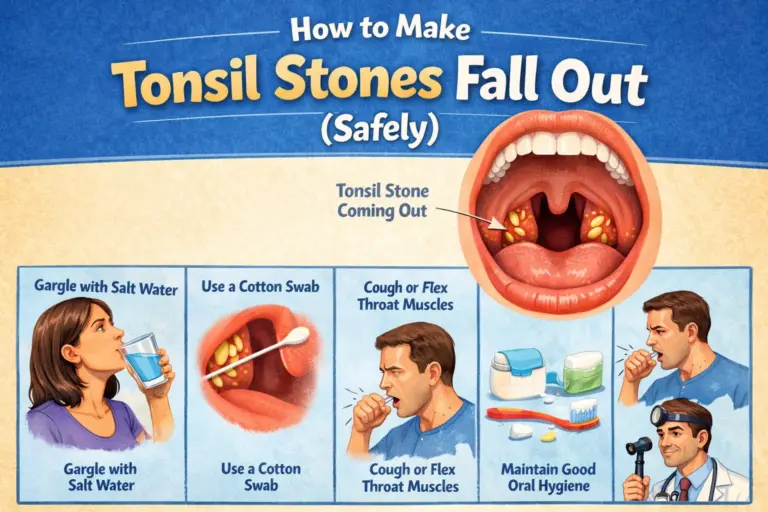
2) Gentle gargle 2–3x/day
Pick one:
- warm salt-water gargle
- warm plain water gargle
Goal: reduce irritation + loosen mucus/debris.
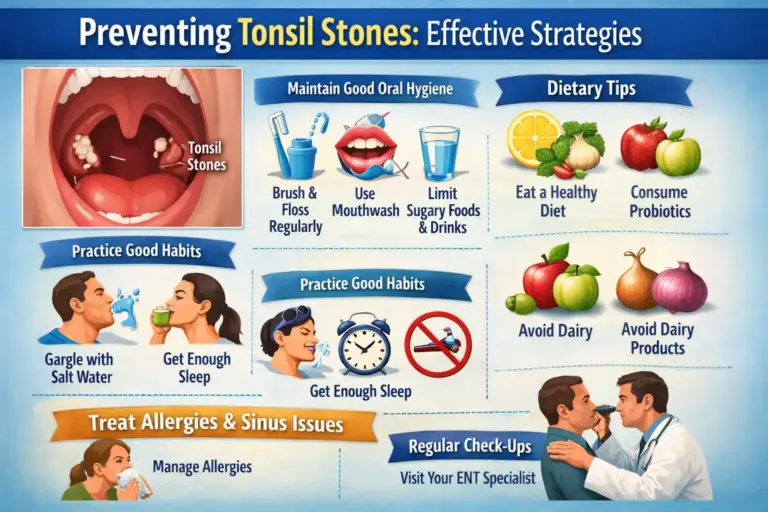
3) Keep oral hygiene consistent
- brush + floss
- gentle tongue cleaning
4) Reduce dryness at night
- water by bed
- humidifier if air is dry
- nasal saline if congestion forces mouth breathing
What you’re looking for after 48 hours:
- The sensation improves → likely irritation, mucus, dryness, or a stone that shifted.
- No improvement → move to Step 3.
Step 3: Do a safe “visibility check” (no force)
Try this once, calmly:
✅ How to check without causing inflammation
- Bright light + mirror
- Say “ahh”
- Look for one tonsil looking more irritated or a tiny white speck
- Don’t press hard. If you gag, stop.
If you can see a small speck
Good, now you can focus on gentle methods (gargle routine, hydration, and safe removal strategies later).
If you still can’t see anything
That doesn’t mean nothing is there. It means it’s either deeper or not a stone.
Step 4: Decide which “pattern” matches you
This is the fastest way to stop guessing.
Pattern A: “Stone pattern”
More likely tonsil stones if you have:
- bad breath that returns fast
- bad taste
- one-sided tonsil irritation
- you’ve coughed stones out before
- symptoms come and go in waves
Pattern B: “Mucus pattern”
More likely post-nasal drip if you have:
- constant throat clearing
- mucus feeling
- worse with allergies or after colds
- morning throat coating
Pattern C: “Reflux pattern”
More likely reflux/LPR if you have:
- lump sensation worse after meals
- worse at night / when lying down
- sour taste, burping, chest discomfort OR “silent reflux” signs
- voice hoarseness / frequent throat clearing
Pattern D: “Dryness pattern”
More likely dry throat if you have:
- waking up dry
- mouth breathing at night
- symptoms worse after coffee, dehydration, or dry air
- improved quickly with hydration/humidifier
Most people are a mix of stone + one trigger (like reflux or post-nasal drip). That’s why recurrence happens.
The big mistake: treating the feeling as proof
That “stuck” sensation is real, but it doesn’t automatically mean a stone is sitting there right now.
If you treat every sensation like a stone and start digging, you create inflammation that makes the sensation worse, and you increase the chance of future stones.
When to see a doctor / ENT
Get checked if you have:
- fever, severe sore throat, or you feel very sick
- one-sided swelling getting bigger
- trouble swallowing liquids or breathing
- symptoms that persist beyond 2–3 weeks
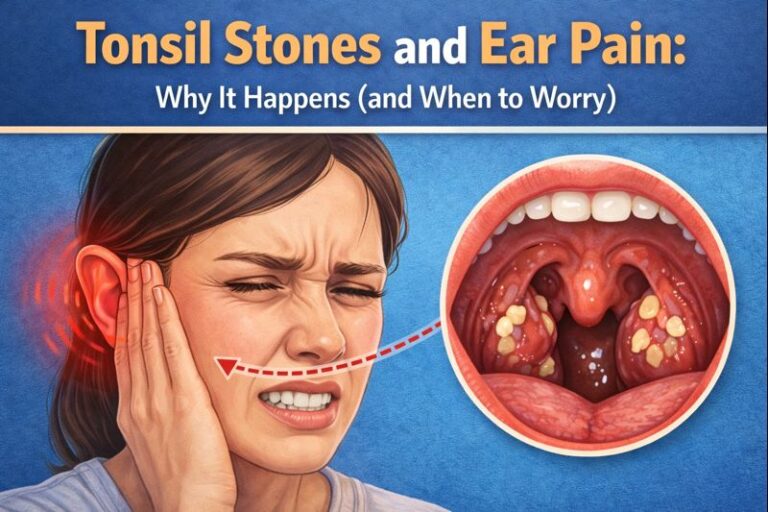
- repeated ear pain on one side with throat symptoms
- you’re constantly dealing with this cycle and want a long-term fix
What actually helps long-term (and why most people fail)
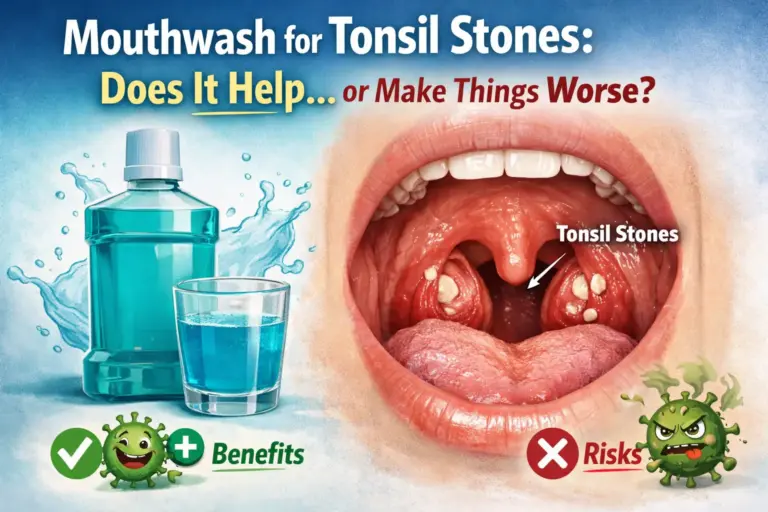
If you can’t see stones but keep feeling symptoms, the solution is usually not “a stronger mouthwash.”
It’s:
- a repeatable routine
- a safe flare-up plan
- and the ability to identify your triggers (food, reflux, drip, dryness)
That’s exactly why the Guide + Tracker bundle works so well: it gives you the step-by-step system plus the pages to track what’s actually causing your flare-ups-so you stop guessing and start controlling it.
Tonsil stones can feel embarrassing and confusing , especially when bad breath or throat discomfort keeps coming back. That’s why I created the Tonsil Stones Guide eBook: first you’ll understand exactly what’s happening and which symptoms matter, then you’ll read real experiences from others, and finally you’ll get a step-by-step plan: simple home routines + helpful products, plus a clear “doctor path” explaining trusted professional treatments and when they’re considered. Download the eBook
Looking for a Structured Way to Manage Tonsil Stones?
If you want medically responsible, step-by-step guidance beyond scattered online advice, this complete guide walks you through safe removal methods, prevention strategies, and long-term management. Includes a printable 30-day tracking system.
Explore The Complete Guide → Instant digital download • Professionally designed PDF