
Understanding the Causes of Tonsil Stones
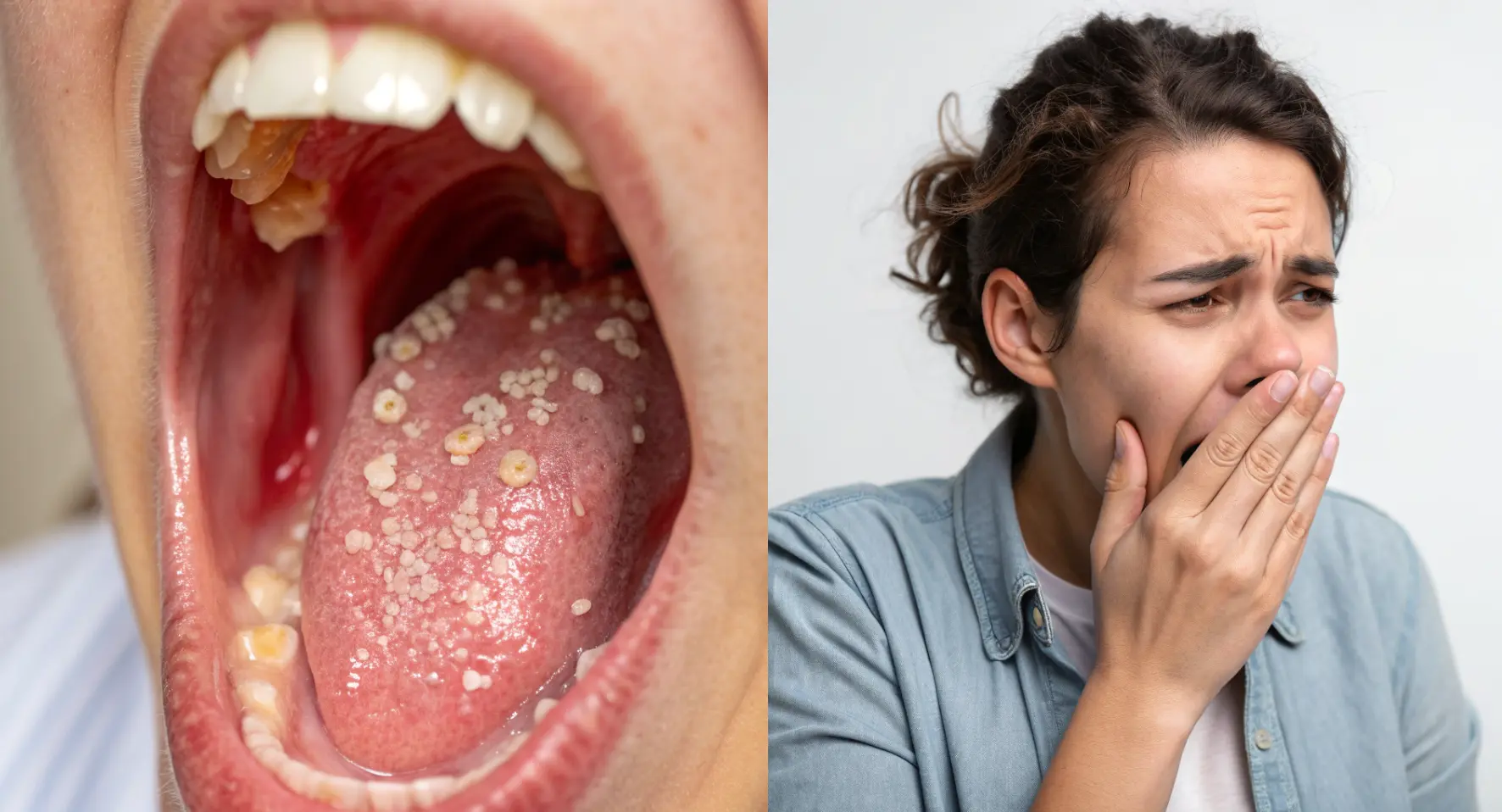
Tonsil stones (tonsilloliths) are small, calcified deposits that can form in the crevices of your tonsils. They’re usually harmless, but they can cause bad breath, throat irritation, or the annoying feeling that something is stuck in your throat. This guide explains why tonsil stones form, what makes them more likely, and what you can do to reduce them safely.
If you’re new to the topic, start here: What are tonsil stones? (/what-are-tonsil-stones)
Quick Answer
- Tonsil stones form when debris gets trapped in tonsil crypts and hardens over time.
- Deep tonsil crypts, bacteria, postnasal drip, and dry mouth can increase risk.
- Common symptoms include bad breath, sore throat, and throat “lump” sensation.
- Good oral hygiene, hydration, and gentle gargling can help reduce recurrence.
- Avoid poking or using sharp tools—see a dentist/ENT if problems persist.
What Are Tonsil Stones?
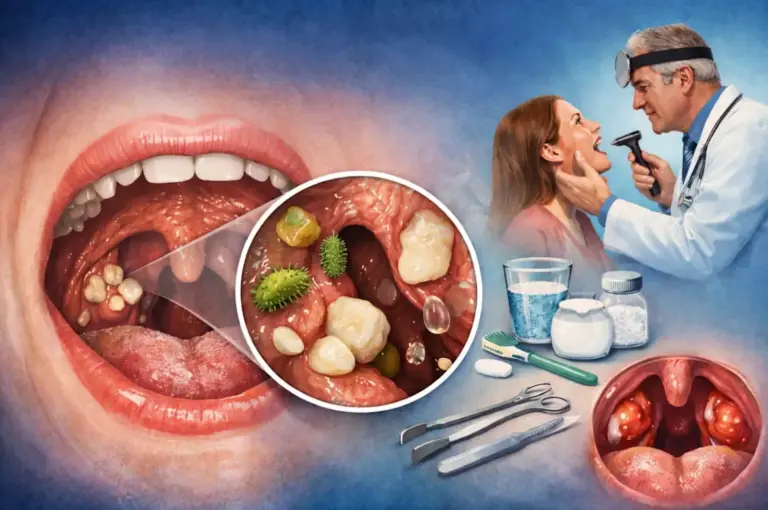
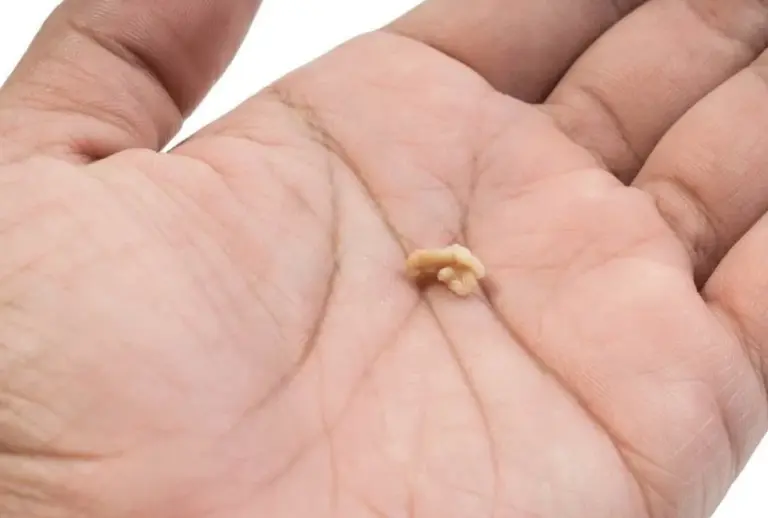
Tonsil stones are small white or yellowish lumps that develop in tonsil crypts (tiny pockets on the surface of the tonsils). These pockets can trap:
- food particles
- mucus
- dead cells
- bacteria
Over time, minerals in saliva (especially calcium salts) can harden this material into small stones. Most are only a few millimeters, but occasionally they can become larger and more noticeable.
Learn more: Tonsil stones basics (/what-are-tonsil-stones)
What Causes Tonsil Stones?
Tonsil stones don’t have one single cause. They form due to a mix of tonsil anatomy, debris buildup, and bacterial activity. Below are the most common contributors.
For a full overview of causes: Tonsil stones causes (/tonsil-stones-causes)
Cryptic Tonsils (Deep Pockets)
Some people naturally have deeper or more uneven tonsil crypts. These pockets act like “traps” where debris can collect and stay long enough to harden.
If you tend to get stones often, anatomy is often a big reason—even with good hygiene.
Bacteria and Biofilm
The mouth contains many bacteria. When debris sits inside tonsil crypts, bacteria can feed on it and form a sticky coating called biofilm. This can make it easier for debris to clump together and harder for the body to clear it naturally.
Bacterial breakdown of debris can also create volatile sulfur compounds, which contribute to the strong smell many people notice.
Related: Tonsil stones and bad breath (/tonsil-stones-bad-breath)
Oral Hygiene and Debris Load
Oral hygiene doesn’t “cause” tonsil crypts, but it can influence how much debris is available to get trapped.
If brushing, flossing, and tongue cleaning are inconsistent, more bacteria and particles remain in the mouth and can migrate toward the tonsils.
Postnasal Drip (Allergies, Sinus Issues)
Postnasal drip means mucus is constantly draining down the back of the throat. That mucus can carry bacteria and trap particles, increasing the chance of buildup in tonsil crypts.
If you often have allergies, congestion, or sinus issues, managing postnasal drip can reduce recurrence.
Dry Mouth and Dehydration
Saliva helps “wash” the mouth and throat naturally. When you’re dehydrated or you breathe through your mouth (especially at night), you may have less saliva and thicker secretions. This can make debris more likely to stick and accumulate.
Simple hydration can make a real difference for some people.
Other Contributing Factors
Other factors that may increase risk include:
- frequent tonsillitis or throat infections
- smoking (irritation + changes in oral environment)
- medications that cause dry mouth
- enlarged tonsils
Symptoms of Tonsil Stones
Some tonsil stones cause no symptoms, especially small ones. When symptoms appear, they usually include:
- Bad breath (halitosis) — the most common complaint
- Sore throat or scratchy irritation
- Feeling of something stuck in the throat
- Difficulty swallowing (more common with larger stones)
- Ear discomfort (referred sensation from throat nerves)
- Visible white/yellow spots on the tonsils
Full guide: Tonsil stones symptoms (/tonsil-stones-symptoms)
Self-Care and Prevention Strategies
Many people can reduce tonsil stones by lowering debris buildup and supporting the mouth’s natural cleaning process.
For more prevention: How to prevent tonsil stones (/tonsil-stones-prevention)
What helps most
- Brush twice daily (and gently brush the tongue)
- Floss daily to reduce trapped food particles
- Drink water regularly, especially after meals
- Warm salt-water gargle (may soothe irritation and help loosen debris)
- Sugar-free gum to stimulate saliva (helpful if you have dry mouth)
- Non-alcohol mouthwash (optional; avoid harsh formulas)
Comparison table: common methods
| Method | Description | Best for | Safety notes |
|---|---|---|---|
| Salt-water gargle | Warm saline rinse | Soothing throat + loosening debris | Don’t swallow; stop if it irritates |
| Oral hygiene | Brush + floss + tongue cleaning | Prevention | Be gentle if throat is sore |
| Hydration | Water throughout day | Prevention | None |
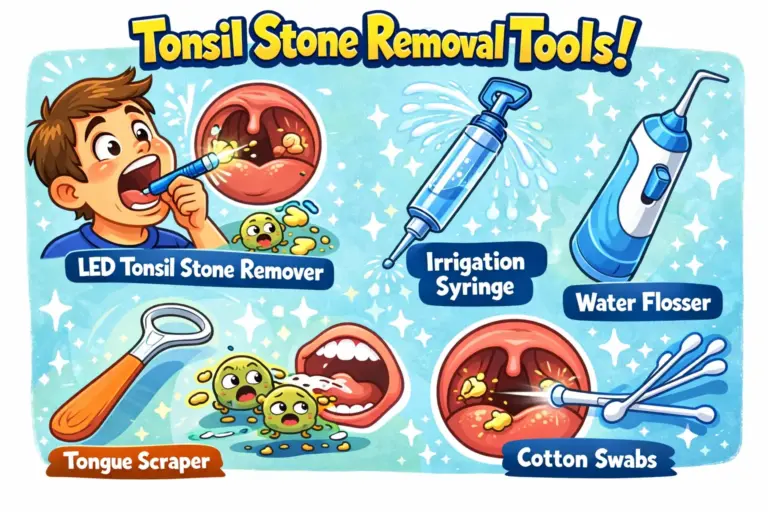
| Tongue scraper | Removes tongue coating | Breath + prevention | Use gently (gag reflex) |
| Water flosser (low pressure) | Gentle rinse near tonsils | Some people with recurrent debris | Avoid high pressure |
| Cough/throat clear | Natural dislodging | Occasional small stones | Don’t force gagging |
Important Warnings: What to Avoid
Trying to “dig out” tonsil stones can cause injury. Avoid:
- Sharp tools (toothpicks, tweezers, dental picks)
- Aggressive poking or deep probing
- Forcing gagging repeatedly
- Harsh chemical rinses or strong alcohol mouthwash (can irritate + dry mouth)
If stones are painful, frequent, or keep returning, it’s safer to discuss options with a professional.
Related: Safe tonsil stone removal options (/tonsil-stones-removal)
Myths vs. Facts About Tonsil Stones
Myth: Tonsil stones are a sign of a serious disease.
Fact: They’re usually harmless deposits from trapped debris.
Myth: Tonsil stones are contagious.
Fact: They’re not contagious—this is buildup inside your own tonsils.
Myth: Surgery is always needed.
Fact: Most cases can be managed with prevention and conservative care.
Myth: Only people with poor hygiene get tonsil stones.
Fact: Tonsil anatomy and postnasal drip can cause stones even with good hygiene.
Myth: All throat discomfort is tonsil stones.
Fact: Many conditions (strep, tonsillitis, reflux, allergies) can feel similar—see a doctor if unsure.
When to See a Doctor
Most tonsil stones are not an emergency, but you should talk to a dentist or ENT if you have:
- persistent or severe pain
- trouble swallowing or breathing
- frequent tonsillitis or recurrent infections
- one-sided swelling that doesn’t improve
- bleeding from tonsils or blood in saliva
- fever or feeling unwell
- symptoms that don’t improve after a few weeks of self-care
A professional can confirm the cause, rule out other conditions, and discuss options.
Frequently Asked Questions (FAQs)
Can tonsil stones cause chronic bad breath?
Yes. Tonsil stones are a common cause of persistent bad breath due to bacterial breakdown of trapped debris. See: (/tonsil-stones-bad-breath)
Are tonsil stones contagious?
No. They’re not infectious and can’t be “caught” from someone else.
Can I prevent tonsil stones completely?
You can often reduce recurrence with hygiene, hydration, and managing postnasal drip, but some people with deep crypts may still get them.
How can I tell if it’s tonsil stones or something else?
Tonsil stones may appear as small white/yellow lumps and often come with bad breath. If you have fever, severe pain, or worsening symptoms, get checked.
Do tonsil stones go away on their own?
Small stones can dislodge naturally during eating, coughing, or gargling.
Can tonsil stones lead to serious problems?
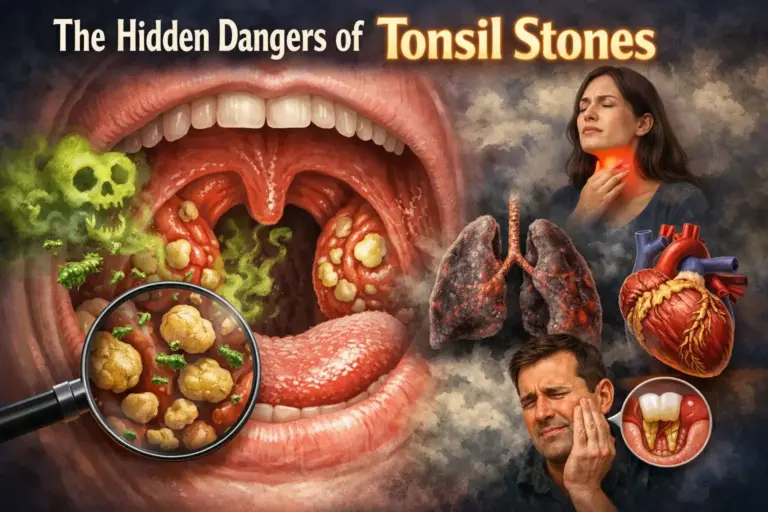
They’re usually benign, but persistent irritation can be annoying and sometimes linked with recurrent tonsillitis.
Is it safe to remove tonsil stones at home?
Avoid poking or sharp tools. Gentle gargling is safer, and persistent cases should be evaluated by a dentist or ENT.
General information only, not medical advice. Always consult a healthcare professional for diagnosis and treatment.
Tonsil stones can feel embarrassing and confusing — especially when bad breath or throat discomfort keeps coming back. That’s why I created the Tonsil Stones Guide eBook: first you’ll understand exactly what’s happening and which symptoms matter, then you’ll read real experiences from others, and finally you’ll get a step-by-step plan: simple home routines + helpful products, plus a clear “doctor path” explaining trusted professional treatments and when they’re considered. Download the eBook
Looking for a Structured Way to Manage Tonsil Stones?
If you want medically responsible, step-by-step guidance beyond scattered online advice, this complete guide walks you through safe removal methods, prevention strategies, and long-term management. Includes a printable 30-day tracking system.
Explore The Complete Guide → Instant digital download • Professionally designed PDF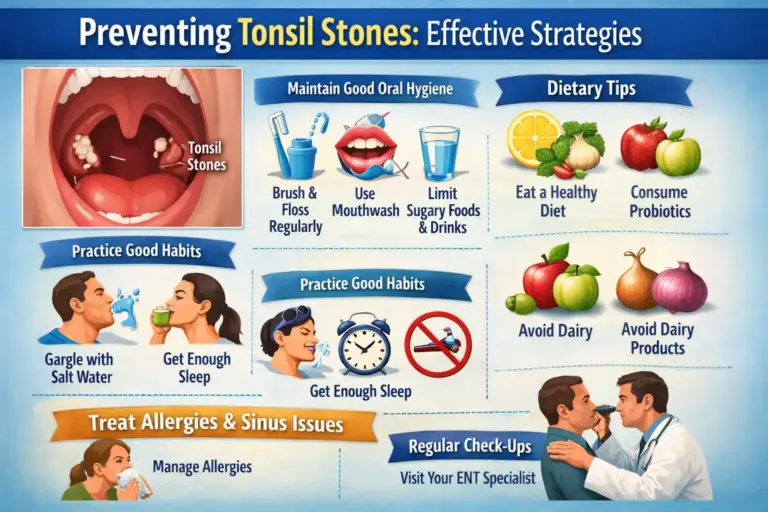
![the mystery of tonsil stones [biology]](https://tonsilstones.net/wp-content/uploads/2026/03/The-Mystery-of-Tonsil-Stones-Biology-768x512.webp "The Mystery of Tonsil Stones [Biology]")