Tonsil Stone Removal Tool: What’s Safe, What Works, and What to Avoid
If you’re searching for a tonsil stone removal tool, you’re probably dealing with one of two things: stubborn bad breath or the annoying “something stuck” feeling. Tools can help—but the wrong tool (or the wrong technique) can irritate your tonsils, cause bleeding, and make the problem worse.
This guide breaks down the safest options, how to choose, and what to avoid.
Quick Answer
- The safest “tools” are usually saltwater gargles, hydration, and tongue cleaning (not metal pick tools).
- A low-pressure water flosser can help some people if used gently.
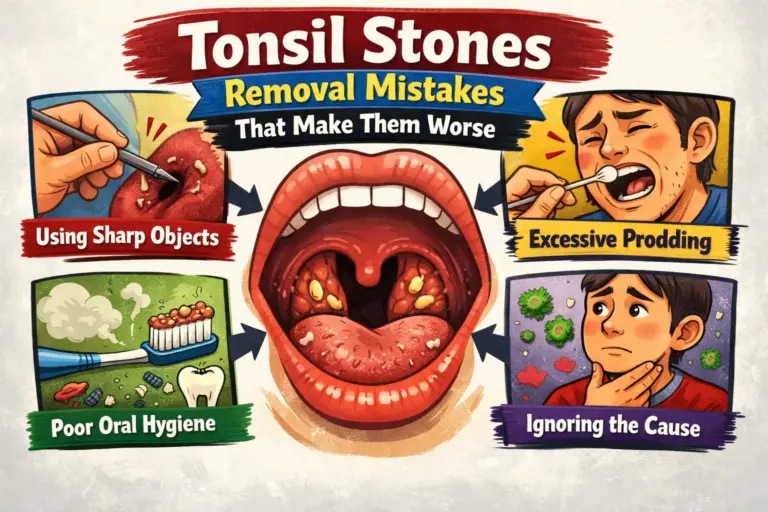
- Avoid sharp metal tools and aggressive digging—tonsil tissue is delicate.
- If stones are frequent, deep, or painful, an ENT is often the best next step.
Why Tools Can Backfire (and why people get stuck)
Tonsils have crypts (tiny pockets). When you poke hard:
- you can cause swelling → crypts trap more debris
- you can cause tiny bleeding → irritation + more inflammation
- you might push debris deeper → stones come back faster
So the best approach is gentle flushing and prevention, not “digging.”
Types of Tonsil Stone Removal Tools (Ranked by Safety)
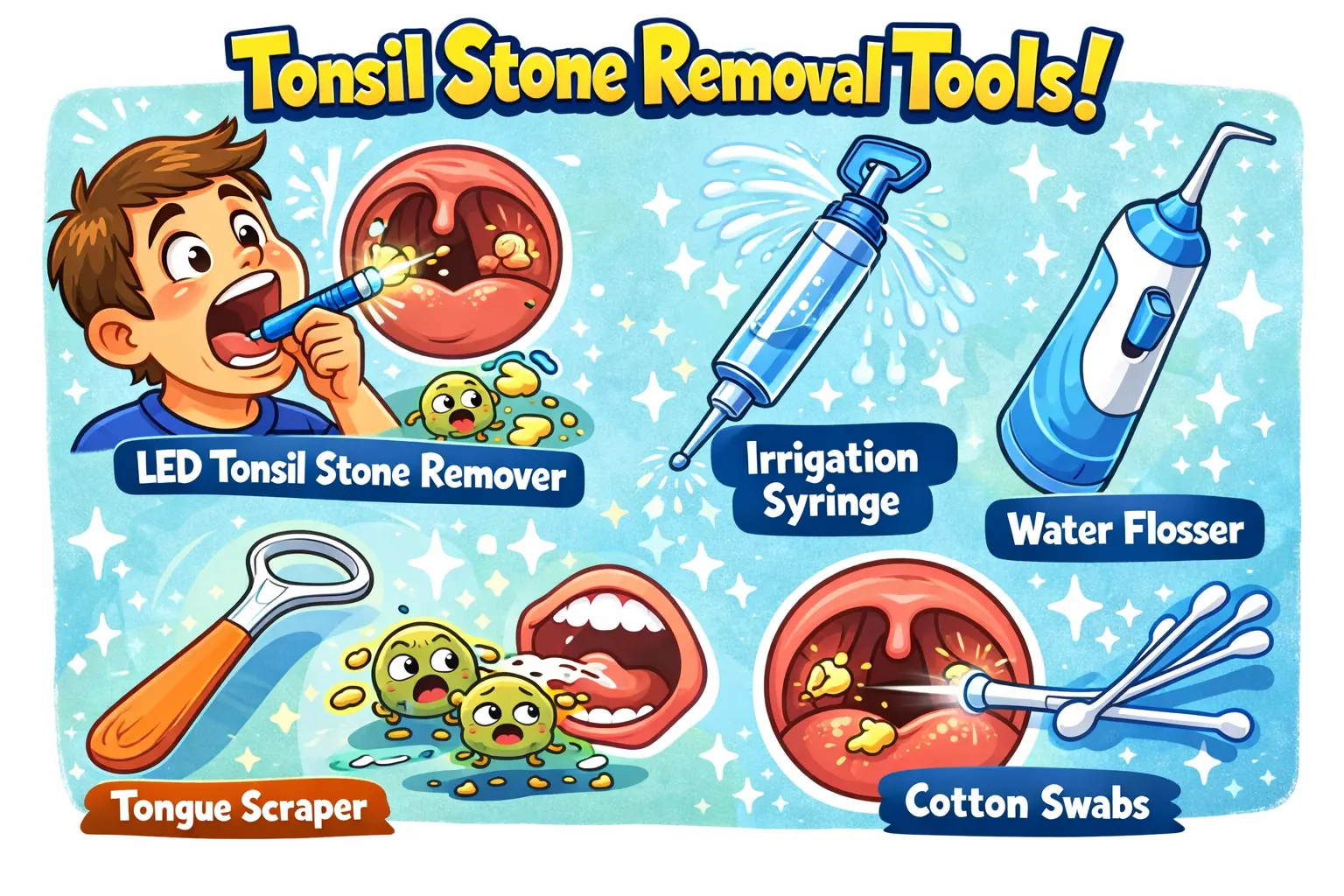
1) ✅ Saltwater Gargle (the safest “tool”)
Best for: mild stones, prevention, throat comfort
Why it works: helps loosen debris and reduces irritation
How to use: warm saltwater, gentle gargle after meals or once daily
2) ✅ Tongue Scraper
Best for: bad breath reduction (even if stones aren’t visible)
Why it works: tongue bacteria is a major breath source
How to use: gentle strokes, once daily
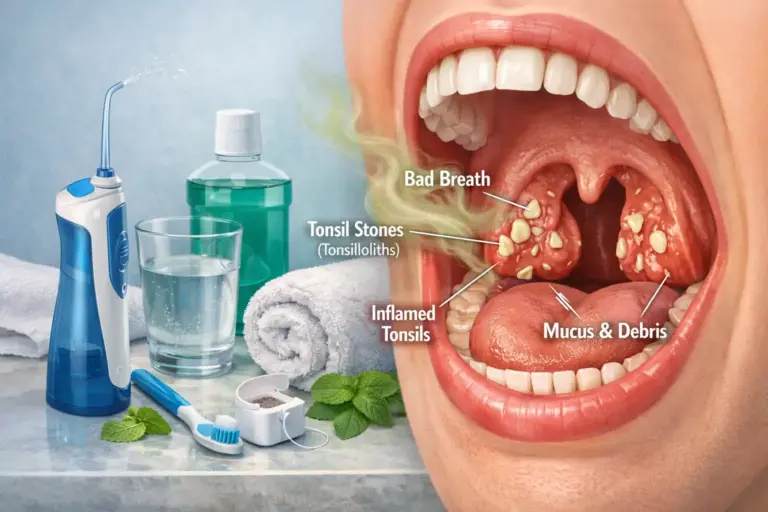
3) ✅ Low-Pressure Water Flosser (Oral Irrigator)
Best for: people with recurring stones who want a gentle flush
Use carefully:
- use the lowest pressure
- aim near the tonsil area, not deep into crypts
- stop if there is pain or bleeding
Not for: very sensitive gag reflex, active infection, severe inflammation
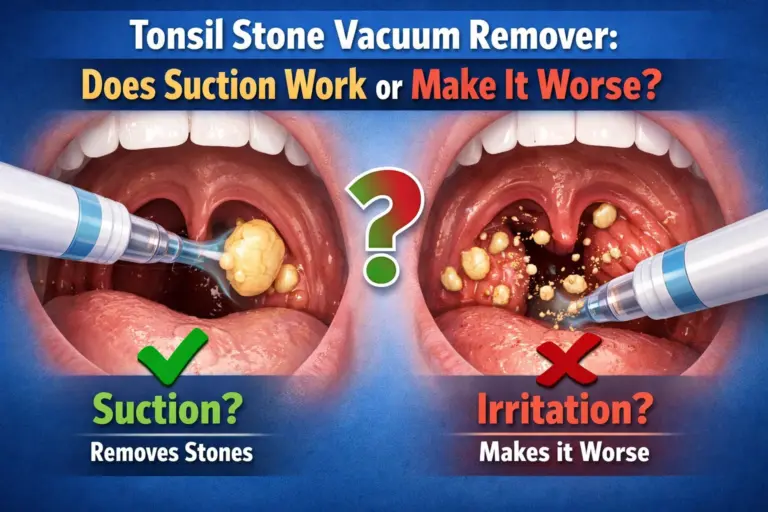
4) ⚠️ Tonsil “Vacuum/Suction” Tools
Best for: only if you’re very gentle and it’s designed for oral use
Risk: can irritate tissue or cause bruising if too strong
If you use it: always start extremely gently and stop with discomfort
5) ⛔ Metal Picks, Hooks, Tweezers, Sharp Tools
Avoid. These are the tools most likely to:
- injure tonsil tissue
- cause bleeding
- worsen swelling and recurrence
- increase infection risk
Even if they “work once,” they often make the next flare-up worse.
Table: Which Tool Fits Your Situation?
| Your main problem | Safest option | “Tool” that may help | What to avoid |
|---|---|---|---|
| Bad breath, no visible stones | Tongue scraper + oral hygiene | Alcohol-free mouth rinse | Harsh alcohol mouthwash |
| Mild stones sometimes | Saltwater gargle | Low-pressure water flosser | Metal tools |
| “Something stuck” feeling | Gargle + hydration | ENT evaluation if persistent | Digging/poking |
| Frequent recurrence | Prevention routine | Gentle irrigator + ENT consult | Vacuum/high pressure |
| Pain / swelling / fever | Doctor/ENT | None at home | Any removal attempts |
Safe Self-Care While You’re Deciding What to Buy
If you want something that helps today without risk:
- Warm saltwater gargle
- Hydrate (especially after meals)
- Brush teeth + tongue daily
- Avoid smoking/vaping if possible
- Treat post-nasal drip (saline rinse can help)
When to Stop DIY and See a Professional
See a doctor/ENT urgently if you have:
- severe one-sided swelling
- fever with worsening throat pain
- trouble swallowing liquids or breathing
- bleeding that doesn’t stop
- persistent symptoms that don’t improve
FAQs
Do tonsil stone removal kits work?
Some help, but most kits include risky tools. If you buy a kit, prioritize gentle tools and avoid anything sharp.
Is a water flosser safe for tonsil stones?
It can be, if used at the lowest pressure and gently. High pressure can irritate tonsils.
Why do stones come back after I remove them?
Because the crypt still traps debris. Prevention (daily routine + triggers) is the long-term fix.
What is the safest “tool” overall?
Saltwater gargle + tongue cleaning. Simple but effective for many people.
Tonsil stones can feel embarrassing and confusing — especially when bad breath or throat discomfort keeps coming back. That’s why I created the Tonsil Stones Guide eBook: first you’ll understand exactly what’s happening and which symptoms matter, then you’ll read real experiences from others, and finally you’ll get a step-by-step plan: simple home routines + helpful products, plus a clear “doctor path” explaining trusted professional treatments and when they’re considered. Download the eBook
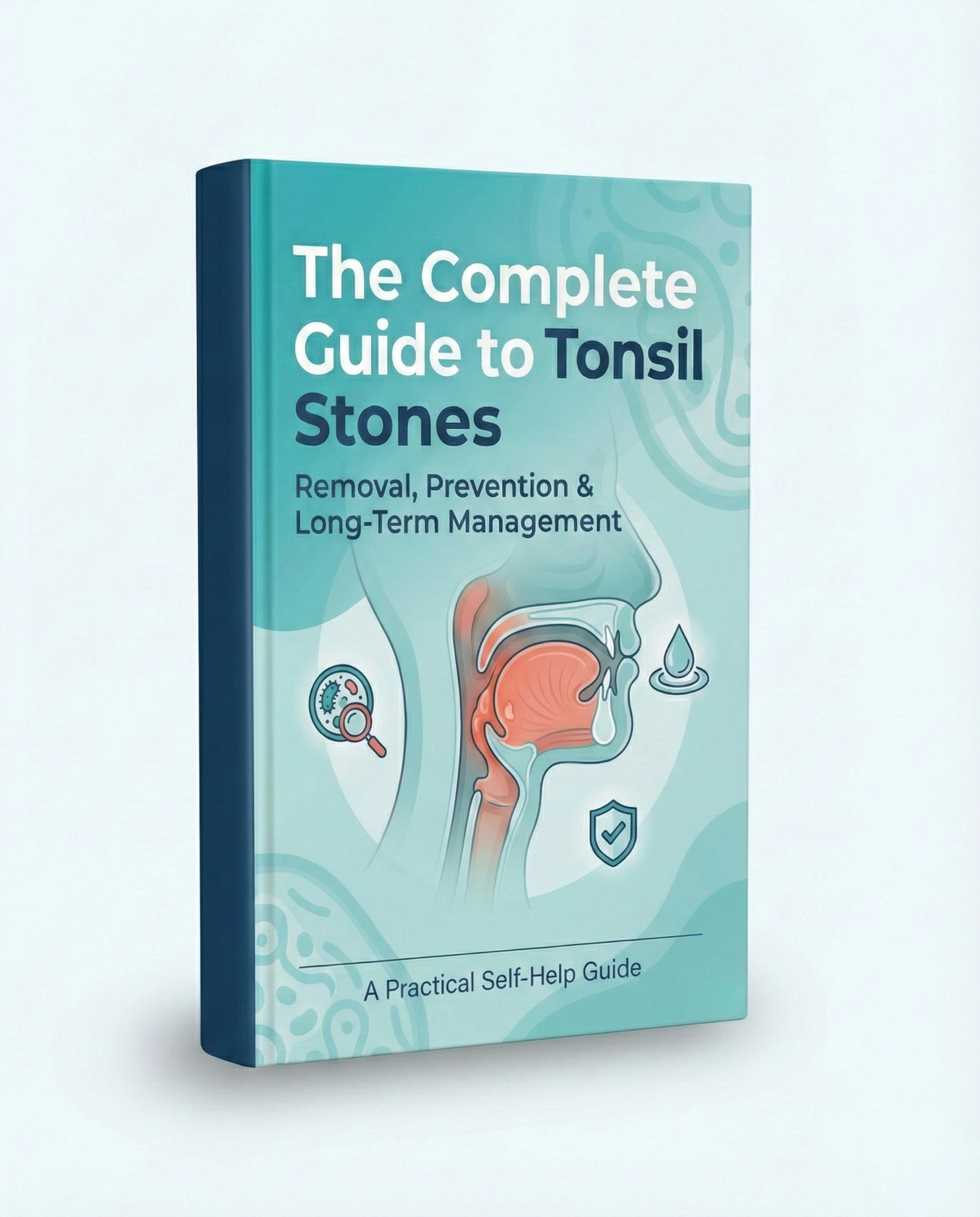
Looking for a Structured Way to Manage Tonsil Stones?
If you want medically responsible, step-by-step guidance beyond scattered online advice, this complete guide walks you through safe removal methods, prevention strategies, and long-term management. Includes a printable 30-day tracking system.
Explore The Complete Guide → Instant digital download • Professionally designed PDF