Tonsil Stones: Symptoms, Causes, Safe Removal, and When to See a Doctor
Tonsil stones can be surprising the first time you notice them. Maybe you saw a small white or yellow lump in the back of your throat. Maybe you have bad breath that keeps coming back even though you brush well. Or maybe it feels like something is stuck in your throat and you cannot quite clear it.
At TonsilStones.net, I want to make this topic simple and practical. Tonsil stones are common, and in many cases they are more annoying than dangerous. But they can still affect your breath, comfort, and confidence. Cleveland Clinic says tonsil stones are usually not harmful, while Healthdirect explains that they form when debris builds up in the tonsils and hardens over time.
What are tonsil stones?
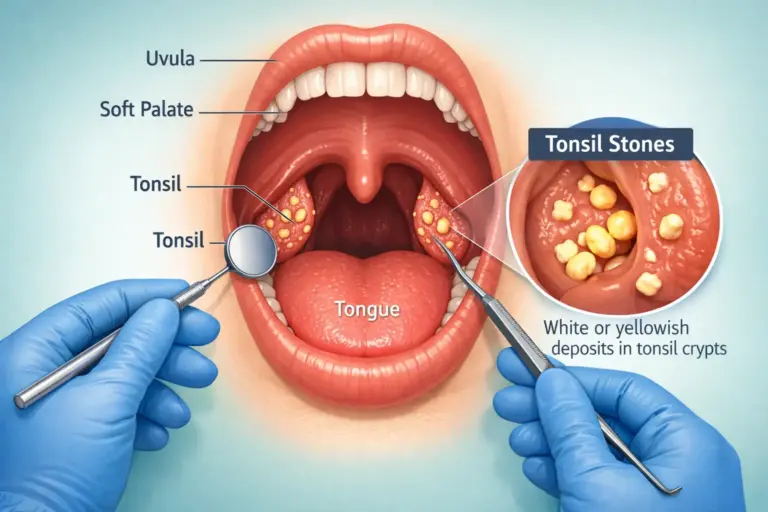
Tonsil stones, also called tonsilloliths, are small hardened lumps that form in the tiny pockets or crevices of your tonsils. These pockets can trap bits of food, bacteria, dead cells, and other debris. Over time, that material can harden into visible white or yellow stones. Healthdirect describes them as lumps made from calcium, food particles, bacteria, and dead cells. Cleveland Clinic and NHS-related sources describe the same basic process: debris gets trapped in the tonsil crypts and calcifies.
What do tonsil stones feel like?
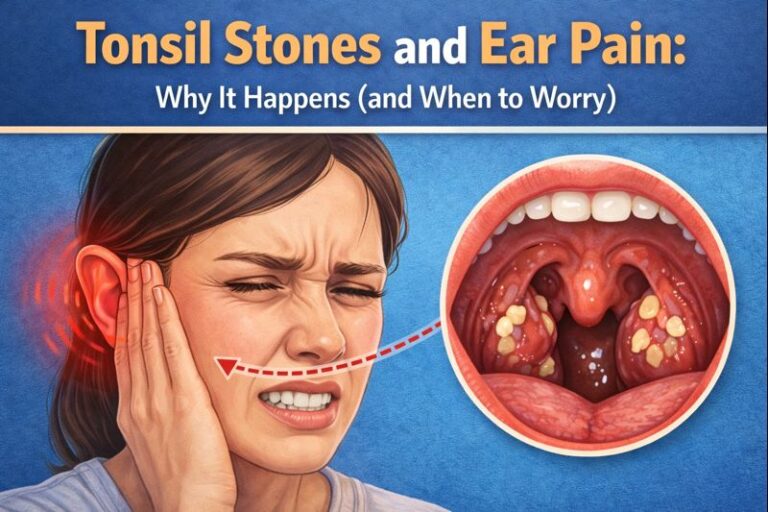
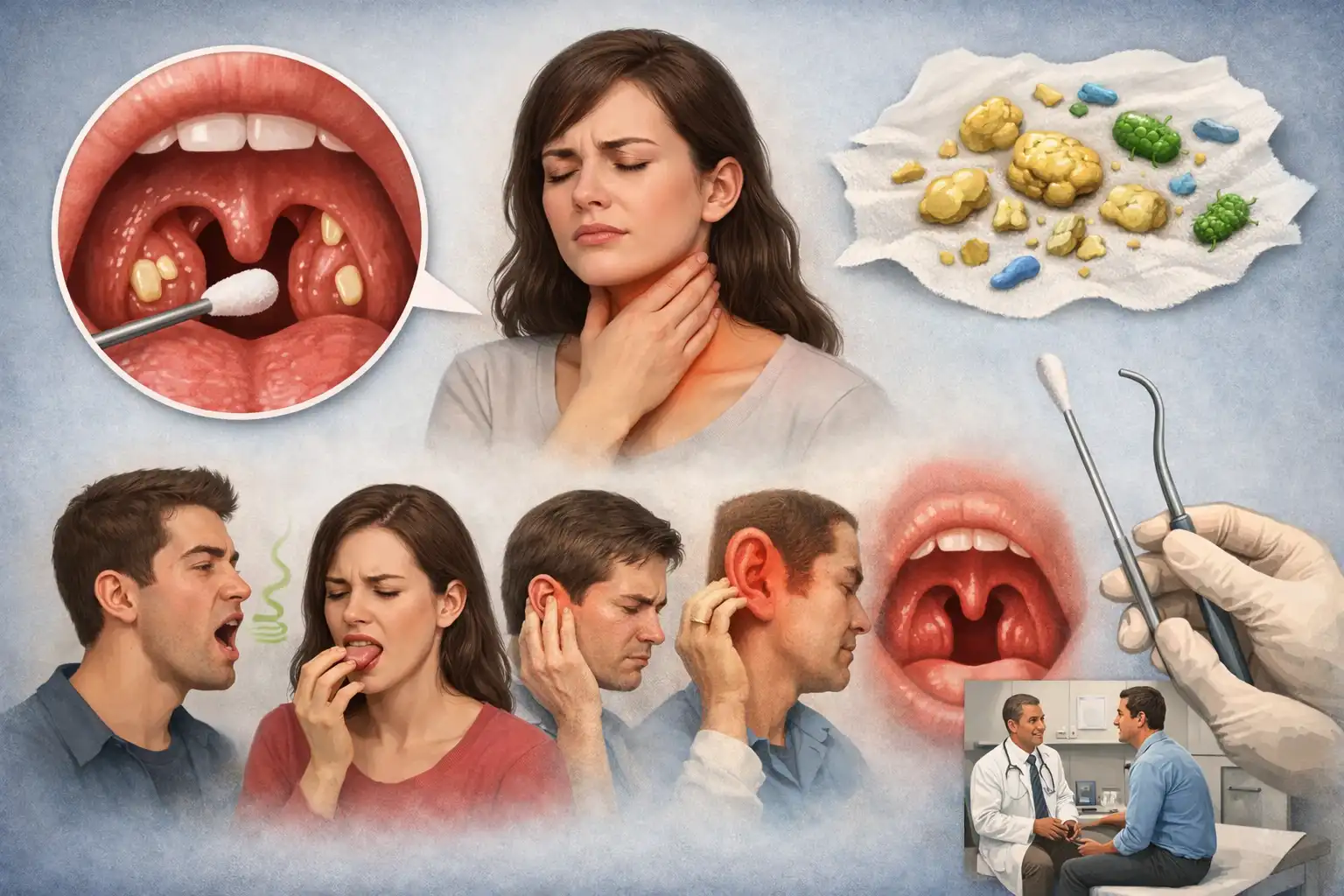
Some people have very small tonsil stones and never notice them. Others notice symptoms almost immediately. Common symptoms include bad breath, a sore throat, trouble swallowing, ear discomfort, hoarseness, and the feeling that something is stuck in the throat. You may also see white or yellow spots on the tonsils. These symptom patterns are described by Healthdirect and Cleveland Clinic.
Why do tonsil stones cause bad breath?
This is one of the biggest reasons people start searching for answers. Tonsil stones can trap bacteria and decaying debris, which can create a foul smell or bad taste in the mouth. Mayo Clinic’s Q&A on tonsil stones notes that bad breath is a common sign because of the bacteria that collect on the stones, and Cleveland Clinic lists bad breath as one of the most common symptoms.
It is worth remembering that tonsil stones are not the only cause of bad breath. Cleveland Clinic notes that poor oral hygiene is a major cause of halitosis, and other dental or medical problems can also contribute.
What causes tonsil stones?
Tonsil stones form when material gets trapped in the natural pockets of the tonsils. Over time, the trapped debris hardens. Healthdirect says you may be more likely to get them if you have poor oral hygiene, frequent tonsil infections, or deep tonsil pockets. Cleveland Clinic similarly points to bacteria, food particles, and debris becoming stuck in those areas.
In practical terms, some people are simply more prone to them because of the shape of their tonsils. If your tonsils have deeper crypts, it is easier for debris to stay there long enough to form stones. Repeated throat or tonsil problems may also make the issue more noticeable over time.
Are tonsil stones dangerous?
In many cases, no. Small tonsil stones are often harmless and may not cause any symptoms at all. Cleveland Clinic says they generally are not harmful, and Healthdirect says small stones are common and usually do not lead to problems.
That said, “not dangerous” does not mean “ignore everything.” If symptoms are persistent, painful, or worsening, it is smart to get checked. A sensation in the throat, pain when swallowing, or earache can have other causes too. Mayo Clinic notes that tonsil cancer can also cause symptoms such as difficulty swallowing, earache, neck pain, or the feeling that something is caught in the throat.
How to remove tonsil stones safely
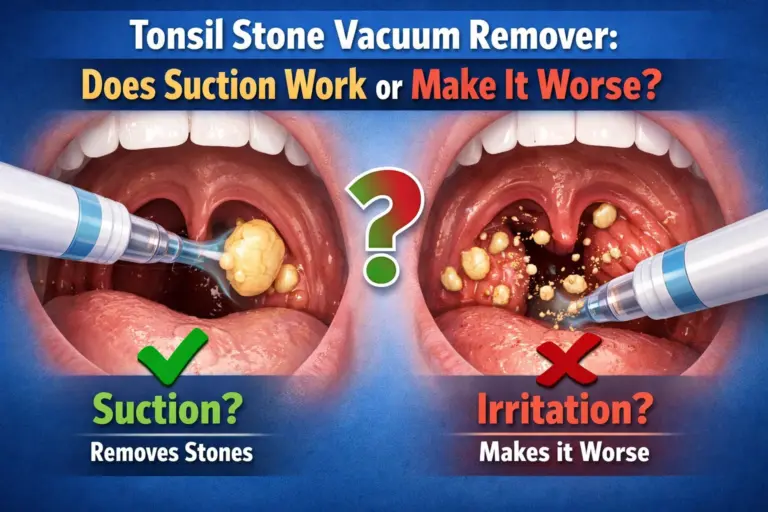
If a stone is small and easy to see, some people can remove it gently at home. Cleveland Clinic says it is okay to try home removal, but you should contact a healthcare provider if home remedies do not work.
Safer approaches usually include:
- gargling with salt water
- coughing gently
- using very gentle oral hygiene habits
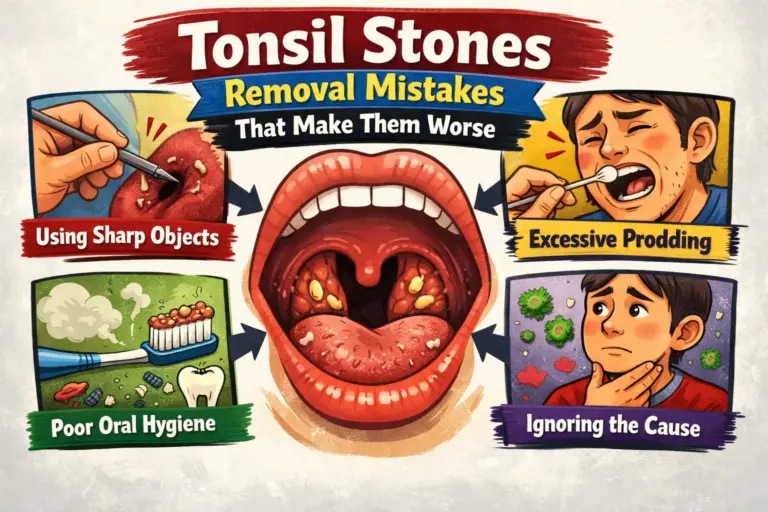
- avoiding aggressive scraping or sharp tools
The goal is to avoid injuring the tonsils. The tissues in this area are delicate, and forcing a stone out can cause bleeding, irritation, or infection risk. Scottish NHS guidance also favors conservative management rather than routine surgery for tonsil stones alone.
When should you see a doctor?
You should get medical advice if:
- the pain is significant
- swallowing becomes difficult
- the stones keep coming back
- there is bleeding
- the area looks very swollen
- you have fever or signs of infection
- one side feels persistently worse than the other
- you have a neck lump or symptoms that do not go away
NHS sore-throat guidance says urgent help is needed for symptoms such as difficulty swallowing, breathing trouble, drooling, or severe symptoms that are getting worse quickly. Mayo Clinic advises seeing a healthcare professional for symptoms that worry you, and its tonsil-cancer guidance highlights persistent swallowing problems, earache, neck swelling, or a constant “something stuck” feeling as reasons not to ignore ongoing symptoms.
Can tonsil stones be prevented?
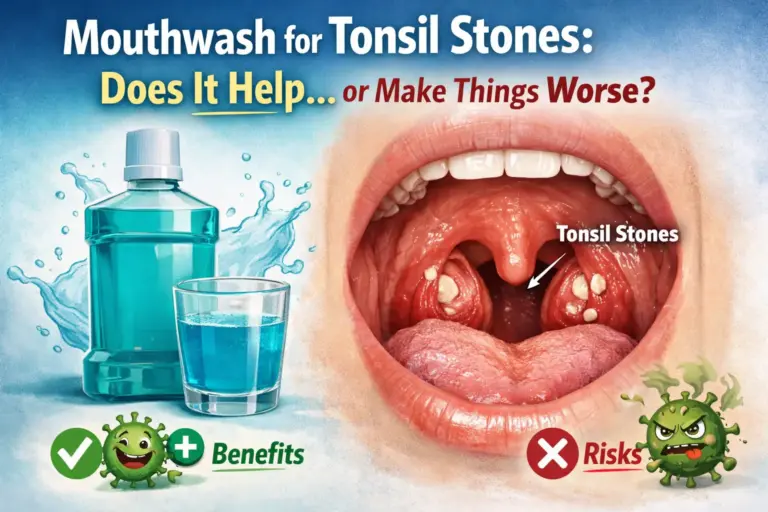
Prevention is not always perfect, but you can reduce the chances of stones returning. Good oral hygiene matters. Since bacteria and debris play a major role, brushing, flossing, and cleaning your mouth consistently can help. Cleveland Clinic notes that recurring stones can often be managed with prevention strategies, while poor oral hygiene is also a major contributor to bad breath in general.
A practical prevention routine often includes:
- brushing teeth thoroughly
- flossing daily
- cleaning the tongue
- staying hydrated
- gargling after meals when helpful
- paying attention to recurring throat or tonsil infections
If you get tonsil stones often, a doctor or ENT may discuss longer-term management. In selected cases, surgery such as tonsillectomy may be considered for ongoing tonsil-related problems, though it is not typically the first answer for simple stones alone. Mayo Clinic describes tonsillectomy as surgery to remove the tonsils, while Cleveland Clinic notes that surgery may be discussed when problems are persistent.
Tonsil stones vs tonsillitis
People often confuse these two conditions, but they are not the same. Healthdirect clearly says tonsil stones are not the same as tonsillitis. Tonsillitis is an infection that makes the tonsils swollen and sore, while tonsil stones are solid lumps that form when trapped debris hardens. NHS says tonsillitis is an infection of the tonsils and commonly causes sore throat and swollen tonsils.
Final thoughts
Tonsil stones are common, often harmless, and usually manageable. But they can still be frustrating, especially when they cause bad breath, throat discomfort, or repeat episodes. The most important thing is to stay calm, avoid aggressive self-removal, and pay attention to symptoms that feel unusual, persistent, or severe. Cleveland Clinic’s overall message is practical: many cases can be handled conservatively, but persistent or bothersome stones deserve proper medical advice.
Tonsil stones can feel embarrassing and confusing – especially when bad breath or throat discomfort keeps coming back. That’s why I created the Tonsil Stones Guide eBook: first you’ll understand exactly what’s happening and which symptoms matter, then you’ll read real experiences from others, and finally you’ll get a step-by-step plan: simple home routines + helpful products, plus a clear “doctor path” explaining trusted professional treatments and when they’re considered. Download the eBook
FAQ section for SEO
Are tonsil stones common?
Yes. Small tonsil stones are common, and many people may have them without obvious symptoms.
Do tonsil stones always smell bad?
Not always, but bad breath is one of the most common complaints because bacteria and trapped debris can produce odor.
Can I remove tonsil stones at home?
Sometimes, yes, but only gently. If home care does not work or symptoms are painful or recurring, see a healthcare provider.
Are tonsil stones a sign of infection?
Not necessarily. They are different from tonsillitis, which is an infection of the tonsils.
When are tonsil stones not normal?
Persistent one-sided symptoms, neck swelling, trouble swallowing, worsening pain, bleeding, or breathing difficulty should not be ignored.
Looking for a Structured Way to Manage Tonsil Stones?
If you want medically responsible, step-by-step guidance beyond scattered online advice, this complete guide walks you through safe removal methods, prevention strategies, and long-term management. Includes a printable 30-day tracking system.
Explore The Complete Guide → Instant digital download • Professionally designed PDF