Tonsil Stones: Symptoms, Causes, Prevention, and Removal Options
You may have noticed a funny smell in your mouth that doesn’t go away after brushing. Maybe you have also spotted some white or yellowish particles in the back of your throat. These could be tonsil stones. Then comes the question: what causes tonsil stones? Is it something serious?
Don’t worry. Tonsil stones are common. They are harmless. But they can be uncomfortable, embarrassing, and confusing. In this article, we will guide you through the process of understanding what they are, what causes them, prevention options, and the best time to consult an ENT doctor.
What Causes Tonsil Stones?
Now it’s time to answer the question: what causes tonsil stones?
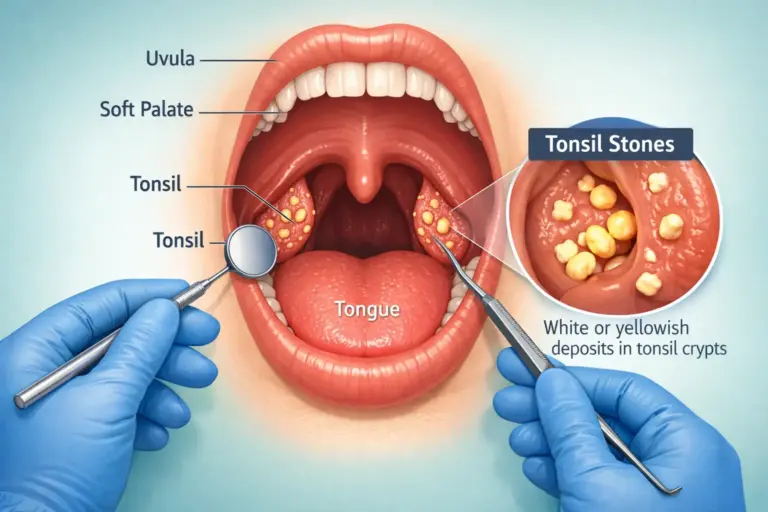
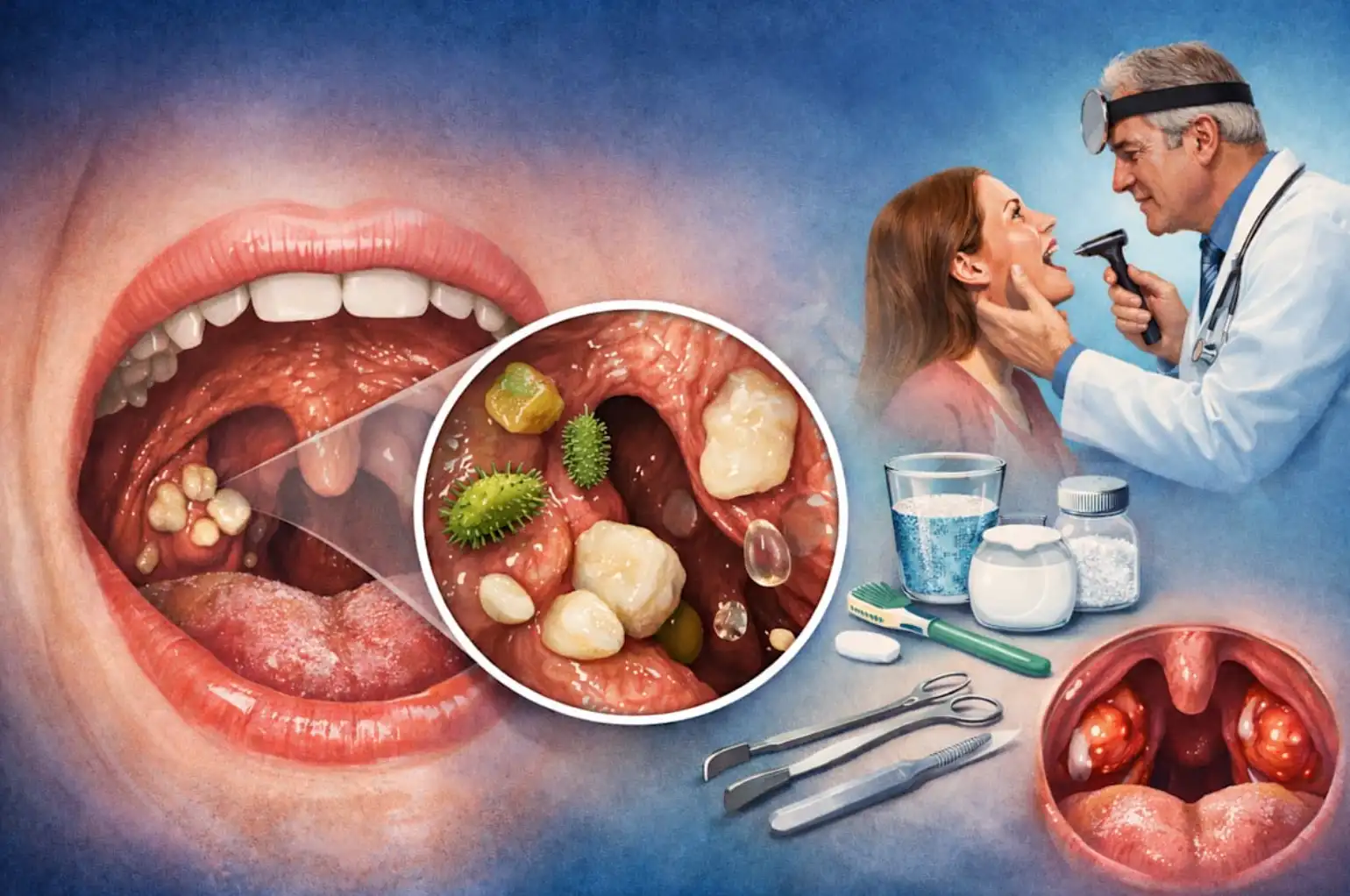
Tonsils are like little sponges in the back of the throat. These sponges have many little holes or pockets called crypts. These crypts collect particles such as food debris, dead cells, mucus, and germs.
As the particles collect in these pockets, they begin to break down. Over time, these particles turn into small pebble-like objects called tonsil stones.
So, what causes tonsil stones? The answer is simple: particles collect in the crypts of the tonsils and turn into stones.
Some things that can facilitate the growth of tonsil stones include:
- Tonsil infections can cause the crypts to get bigger.
- Bad oral hygiene can cause the growth of more germs.
- Postnasal drip increases mucus in the throat.
- More material is caught in large tonsils than in smooth tonsils.
It’s not your fault. Some people just have tonsils that collect mucus more readily.
What Do Tonsil Stones Feel Like?
Some people do not feel anything. Others have symptoms that irritate them every day.
The most common symptom is bad breath. This happens because bacteria in the tonsil stone produce sulfur. The sulfur smells bad. It does not get much better, no matter how much you brush your teeth or gargle with mouthwash.
Other symptoms include:
- Something stuck in the throat
- Mild pain in the throat
- Pain while swallowing
- Earache on one side
- Metallic or bad taste
- White or yellow specks on the tonsils
Tonsil stones can come out on their own. You might cough up a tonsil stone when you least expect it. It’s not pleasant, but it’s not serious.
If the symptoms are mild, then home care is all that is needed. However, if the pain, swelling, or recurring infections increase, then medical intervention may be required.
How to Prevent Tonsil Stones
Preventing tonsil stones is easier than removing them. Since they form from debris and bacteria, the aim is to ensure that your mouth and throat are as clean as possible.
Maintaining good oral hygiene can go a long way in preventing tonsil stones. Brushing your teeth at least twice a day, in the morning and before bed, and flossing every day can prevent bacteria buildup in your teeth. These bacteria can travel to your tonsils.
Using a tongue cleaner to scrape off bacteria buildup on your tongue can also prevent tonsil stones. Gargling with warm salt water can also prevent tonsil stones by removing debris from your throat.
If you suffer from allergies or sinus problems, then dealing with postnasal drip can also prevent tonsil stones. Drinking plenty of water can also prevent tonsil stones since it stimulates saliva production. The more saliva in your mouth, the cleaner it will be.
Preventing tonsil stones does not completely eliminate the possibility of getting them. However, it reduces the likelihood of getting them and makes them smaller.
How to Remove Tonsil Stones Safely
If you already have tonsil stones, then you may want to get rid of them. That is perfectly normal.
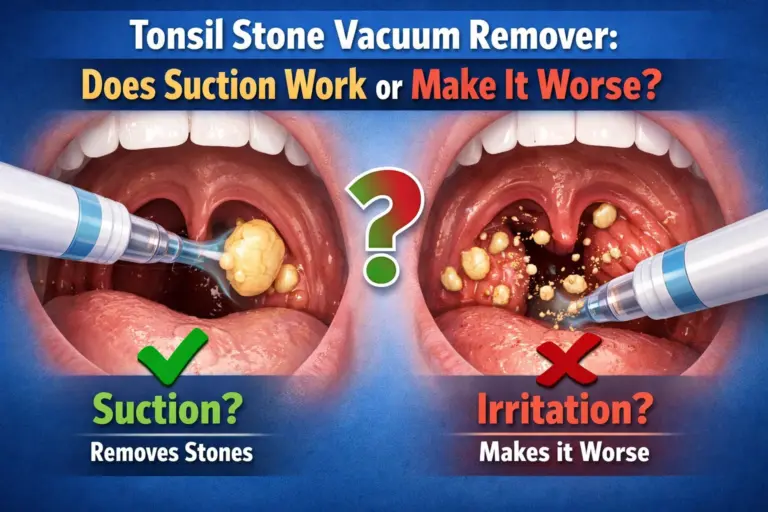
Removing small tonsil stones can be done in a few ways. Gargling with warm salt water can loosen them. Coughing can also loosen them. Some people also use a low-pressure water irrigator, but it has to be used with caution.
Caution! You should not use sharp objects to dig out your tonsil stones. The tonsils can easily bleed.
If stones are large, painful, or recurring, an ENT specialist can safely remove them. In rare cases where stones are frequent and severe, a tonsillectomy may be considered. This means that the tonsils will be removed entirely.
If you would like more step-by-step details on how to deal with tonsil stones, we have a detailed ebook on tonsil stones available on our website. This ebook is a must-read for anyone who deals with tonsil stones or who has a history of tonsillitis.
When Should You See an ENT Specialist?
Most of the tonsil stones are not dangerous. However, there are some situations where you should seek advice.
When to seek advice:
If you experience:
- Severe pain in the throat
- Difficulty swallowing or breathing
- One-sided swollen areas
- Recurring high fevers
- Tonsil bleeding
- Enlarged lymph nodes in the neck
- Tonsil stones that persist despite your best efforts to keep your mouth clean
Are Tonsil Stones Dangerous?
No, they are not. They are not cancerous. They are not life-threatening. They are just a buildup of waste.
But, tonsil stones can affect your quality of life. They can lead to low self-esteem due to bad breath. They can ruin your mealtime. Finally, they can lead to exhaustion due to recurring infections.
Can Children Get Tonsil Stones?
Tonsil stones can happen to children, although they are most common among adults and teens. Children have smooth tonsils and smooth crypts. As people get older, their tonsils develop deeper crypts, and the chances of getting tonsil stones increase. If your child complains of a sore throat and bad breath, then a doctor should examine the child.
Final Thoughts
Now that you know what causes tonsil stones, you’re probably wondering what to do about them. The good news is that there are ways to deal with tonsil stones. The bad news is that there are no magic solutions. The solution involves gentle care, understanding, and knowing when to ask for assistance.
The most important thing to note is that there’s no need to feel embarrassed. Many people have had to deal with this issue in their lives. It’s just a matter of getting the right care to manage the situation.
Looking for a Structured Way to Manage Tonsil Stones?
If you want medically responsible, step-by-step guidance beyond scattered online advice, this complete guide walks you through safe removal methods, prevention strategies, and long-term management. Includes a printable 30-day tracking system.
Explore The Complete Guide → Instant digital download • Professionally designed PDF