Tonsil Stones and Ear Pain: Why It Happens (and When to Worry)
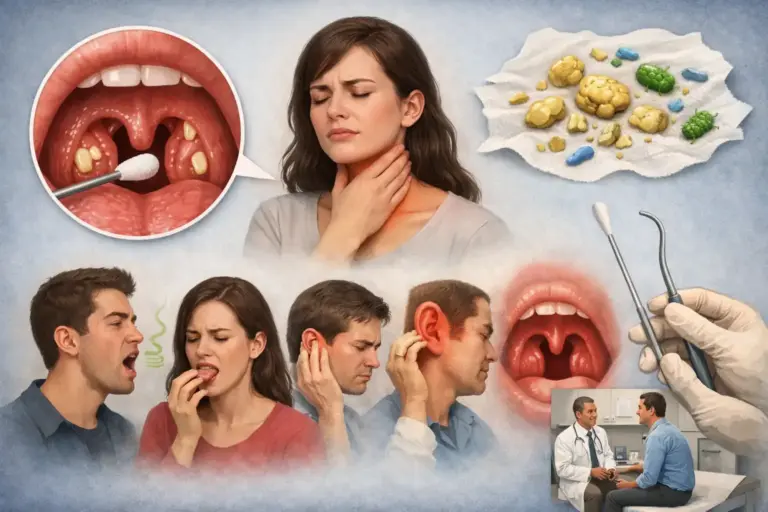
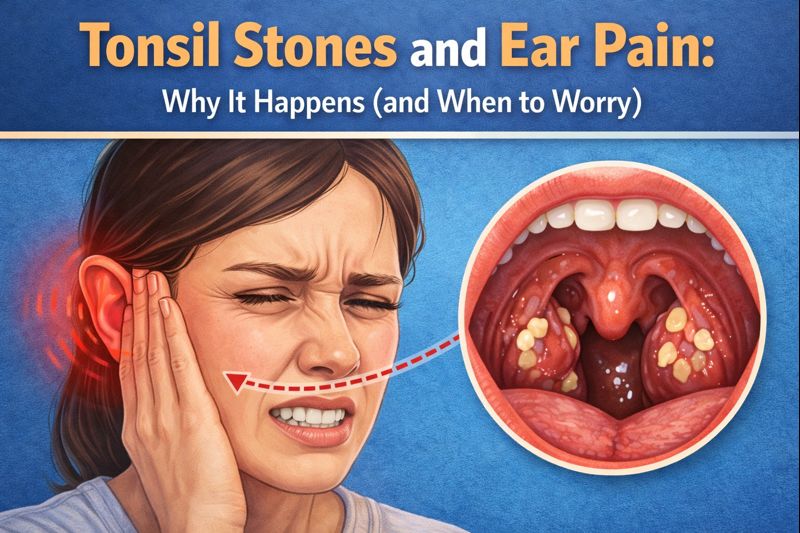
Ear pain with a “normal” ear exam is one of the most confusing tonsil stone symptoms. You feel it in the ear… but the real irritation can be coming from your tonsils.
This article explains why tonsil stones can cause ear pain, what it usually feels like, how to tell if it’s your tonsils vs a real ear infection, and the exact signs that mean you should get checked.
Can tonsil stones really cause ear pain?
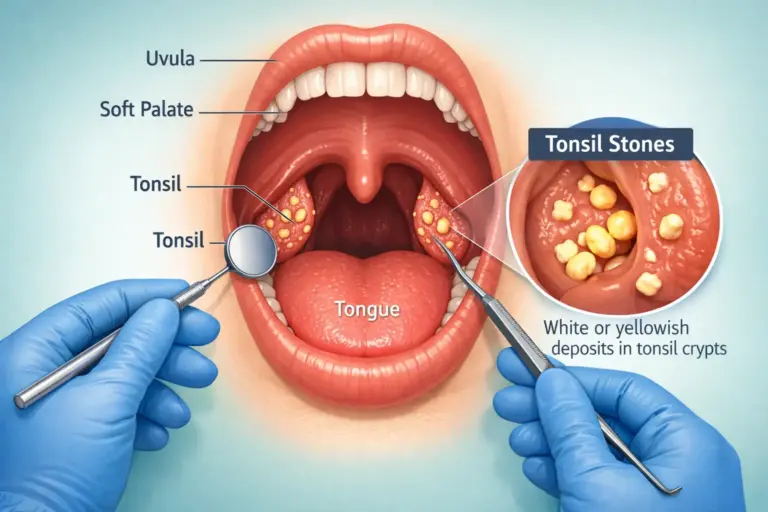
Yes. Tonsil stones can irritate the tonsil tissue and trigger referred pain—meaning your brain “interprets” throat irritation as ear pain because the nerves are connected.
The simple reason (no medical jargon)
Your throat and ear share nerve pathways. When one area gets irritated (tonsils), your nervous system can “send the pain” to a nearby area (ear), even though the ear itself is fine.
This is why people often report:
- Earache on one side
- A dull “pressure” feeling
- Ear pain that comes and goes with throat symptoms
What tonsil-stone ear pain usually feels like
Most people describe it as:
- Dull ache (not sharp)
- Pressure or fullness in one ear
- On-and-off pain that changes during the day
- Worse when swallowing, yawning, or clearing the throat
- Often on the same side as the stone or tonsil irritation
If you also have bad breath/bad taste + something-stuck feeling, tonsil stones become a stronger suspect.
Why it happens (the real mechanism)
Tonsil stones can lead to:
- Local tonsil inflammation (irritated tissue)
- Muscle tension around the throat/jaw from repeated swallowing/throat clearing
- Nerve crossover that “refers” the pain to the ear area
The bigger or deeper the stone, the more likely it causes irritation.
Tonsil stone ear pain vs ear infection (quick comparison)
More likely tonsil stones if:
- Ear pain is mild to moderate
- Comes with bad breath or tonsil discomfort
- Your ear feels “achy” but you hear normally
- No fever
- No ear drainage
- Pain changes with throat actions (swallowing, yawning)
More likely an ear infection if:
- Pain is sharp or intense
- You have fever
- Reduced hearing or muffled sound
- Ear drainage
- Pain is worse when you press/pull the ear (often)
- You recently had a cold and your ear suddenly got worse
If you’re unsure, it’s okay to get your ear checked—because ear infections need different treatment.
Common situations that make tonsil ear pain worse
Even if the stone is the trigger, these can amplify the pain:
- Post-nasal drip (allergies, sinus irritation)
- Acid reflux/LPR (throat irritation, globus, coughing)
- Dry mouth (more debris stickiness + irritation)
- Grinding/clenching (jaw muscle tension)
If your ear pain is worse at night or after spicy/acidic food, reflux may be contributing.
Safe things to try (without risking injury)
You don’t need to “dig” at the tonsils to reduce symptoms.
1) Reduce irritation first (24–72 hours)
- Warm salt-water gargles (2–3x/day)
- Hydrate a lot (dry mouth makes everything worse)
- Gentle oral hygiene (brush, floss, tongue clean)
- Avoid smoking and very spicy/acidic foods for a few days
2) If you suspect a visible stone
- Try gargling, coughing gently, or using a water flosser on the lowest setting aimed carefully (never high pressure)
- Stop if you see bleeding or pain spikes
3) If ear pain is your main complaint
- Warm compress near the jaw/ear area
- Anti-inflammatory pain relief if you can take it safely (follow label directions)
- Rest your jaw (avoid chewing gum, hard foods)
When to worry (get checked)
See a clinician (same day or urgent) if you have:
- High fever or you feel very sick
- Severe one-sided throat pain + swelling
- Trouble swallowing saliva, drooling, or breathing difficulty
- Muffled “hot potato” voice
- Ear pain that is severe, worsening fast, or wakes you up
- Hearing loss, ear drainage, or dizziness
- A neck lump/swelling that’s growing
- Symptoms lasting more than 1–2 weeks with no clear reason
When an ENT is worth it
Consider an ENT visit if:
- Tonsil stones are frequent (weekly/monthly)
- Ear pain keeps returning with tonsil symptoms
- You have chronic tonsil inflammation, deep crypts, or repeated tonsillitis
- Home steps help only briefly
An ENT can confirm the cause and discuss longer-term solutions (including options beyond repeated self-removal).
Quick self-check: is this probably tonsil-related?
If you answer “yes” to 3 or more, tonsil stones/tonsil irritation is likely involved:
- Bad breath that returns quickly
- Bad taste
- Something-stuck feeling
- Tonsil irritation or one-sided throat discomfort
- Earache on the same side
- You’ve coughed out stones before or seen white crumbs in tonsil holes
Tonsil stones can feel embarrassing and confusing — especially when bad breath or throat discomfort keeps coming back. That’s why I created the Tonsil Stones Guide eBook: first you’ll understand exactly what’s happening and which symptoms matter, then you’ll read real experiences from others, and finally you’ll get a step-by-step plan: simple home routines + helpful products, plus a clear “doctor path” explaining trusted professional treatments and when they’re considered. Download the eBook
Looking for a Structured Way to Manage Tonsil Stones?
If you want medically responsible, step-by-step guidance beyond scattered online advice, this complete guide walks you through safe removal methods, prevention strategies, and long-term management. Includes a printable 30-day tracking system.
Explore The Complete Guide → Instant digital download • Professionally designed PDF