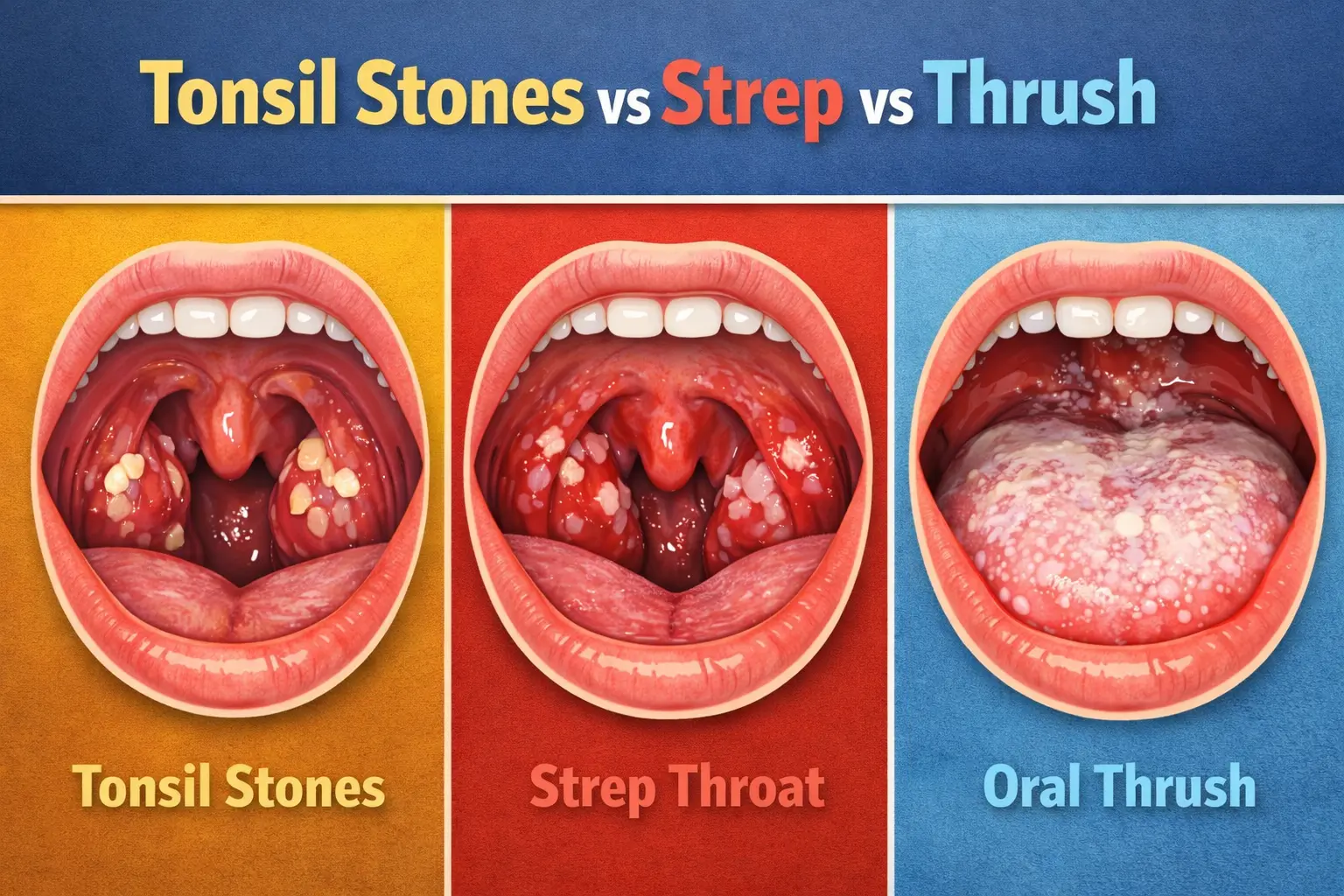
Tonsil Stones vs Strep vs Thrush: How to Tell the Difference
White stuff in the back of your throat can look the same in the mirror—but tonsil stones, strep throat, and oral thrush are not the same problem. This guide helps you spot the differences fast (and know when to get tested).
Fast cheat sheet (most common pattern)
Most likely tonsil stones if you have:
- Bad breath / bad taste that keeps coming back
- Small white/yellow “crumbs” stuck in tonsil holes (crypts)
- “Something stuck” feeling, mild irritation, sometimes earache
- Usually no fever and you don’t feel very sick
Most likely strep if you have:
- Sudden severe sore throat + fever
- Painful swallowing, swollen/tender neck glands
- Tonsils may have white patches/coating
- Often no cough (classic strep pattern)
- Needs a rapid strep test or throat culture to confirm
Most likely thrush if you have:
- Creamy white patches on tongue/inner cheeks (can extend back)
- Soreness/burning, cottony feeling, altered taste
- Often after antibiotics, inhaled steroids, or with dry mouth/diabetes/immune issues
- Typically treated with antifungal meds
The “look test” in the mirror
Tonsil stones (tonsilloliths): “pebbles in holes”
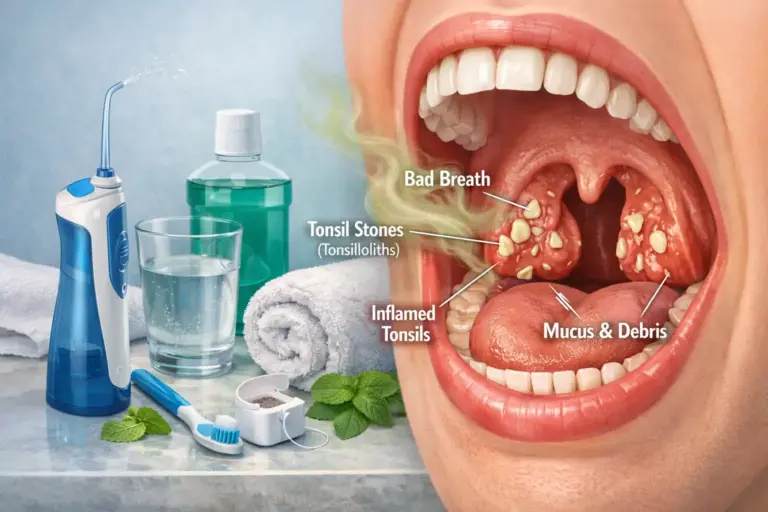
- Look like small white/yellow lumps lodged in tonsil crypts (often just on the tonsils)
- Often smell very bad if you touch them
- May pop out when coughing/gargling
Strep: “white coating on angry tonsils”
- Tonsils can look red/swollen with white patches or streaks
- Usually comes with fever + strong throat pain and you feel sick
- You can’t reliably diagnose strep by looking—testing matters
Thrush: “creamy patches (often more spread out)”
- White/cream patches on tongue/cheeks (may also be near the back)
- Mouth may feel sore, with burning or cottony feeling
- If you try to wipe/scrape, it may leave red irritated tissue underneath
Important: Some white mouth patches should be evaluated if they don’t go away (especially if they cannot be wiped off). If you have a persistent patch, get checked.
Symptom-by-symptom comparison
| Symptom | Tonsil stones | Strep throat | Thrush |
|---|---|---|---|
| Fever | Rare | Common | Uncommon |
| Bad breath | Very common | Sometimes | Sometimes |
| Bad taste | Common | Sometimes | Common |
| “Something stuck” feeling | Common | Less common | Possible |
| White spots | Discrete lumps in tonsil holes | Patches/coating on tonsils | Creamy patches (often tongue/cheeks) |
| Cough | Can happen (irritation) | Usually no cough | Not typical |
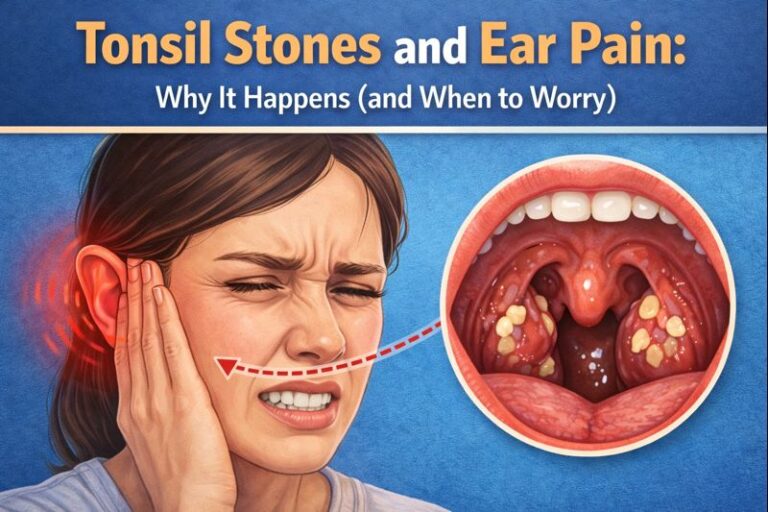
| Ear pain | Can happen (referred pain) | Possible | Not typical |
The safest “what should I do next?” path
If strep seems possible
- Don’t guess. Get a rapid strep test (and sometimes a throat culture).
- If positive, antibiotics are usually recommended to reduce symptoms, spread, and complications.
If thrush seems possible
- Think about triggers: recent antibiotics, inhaler use (steroids), diabetes, dry mouth, immune issues.
- A clinician can usually diagnose by exam and treat with antifungals.
If tonsil stones seem most likely
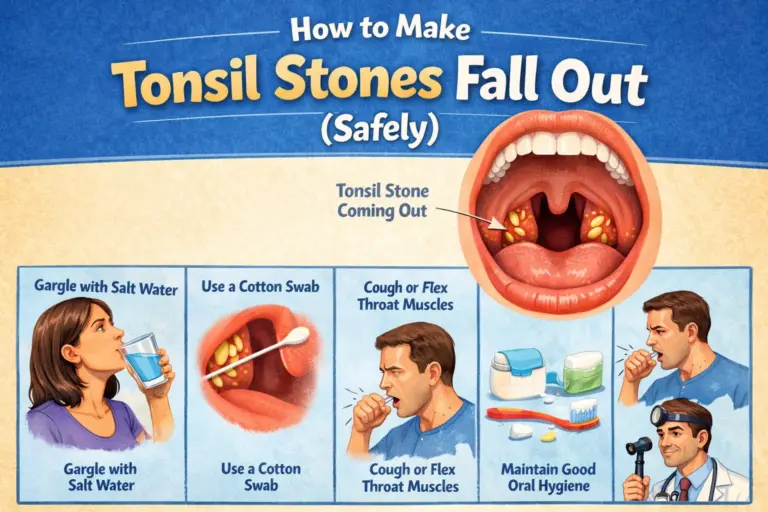
- Start with low-risk steps: warm salt-water gargles, good oral hygiene, hydration.
- Avoid sharp tools or aggressive digging (it can cause bleeding and irritation).
- If stones keep coming back often, an ENT can discuss longer-term options.
Red flags: get urgent care / same-day evaluation
- Trouble breathing, drooling, can’t swallow fluids
- Severe one-sided throat pain + swelling, muffled “hot potato” voice
- High fever with worsening symptoms
- Neck swelling/lump that’s growing
- White patches that persist and don’t match the patterns above
Tonsil stones can feel embarrassing and confusing — especially when bad breath or throat discomfort keeps coming back. That’s why I created the Tonsil Stones Guide eBook: first you’ll understand exactly what’s happening and which symptoms matter, then you’ll read real experiences from others, and finally you’ll get a step-by-step plan: simple home routines + helpful products, plus a clear “doctor path” explaining trusted professional treatments and when they’re considered. Download the eBook
Looking for a Structured Way to Manage Tonsil Stones?
If you want medically responsible, step-by-step guidance beyond scattered online advice, this complete guide walks you through safe removal methods, prevention strategies, and long-term management. Includes a printable 30-day tracking system.
Explore The Complete Guide → Instant digital download • Professionally designed PDF