
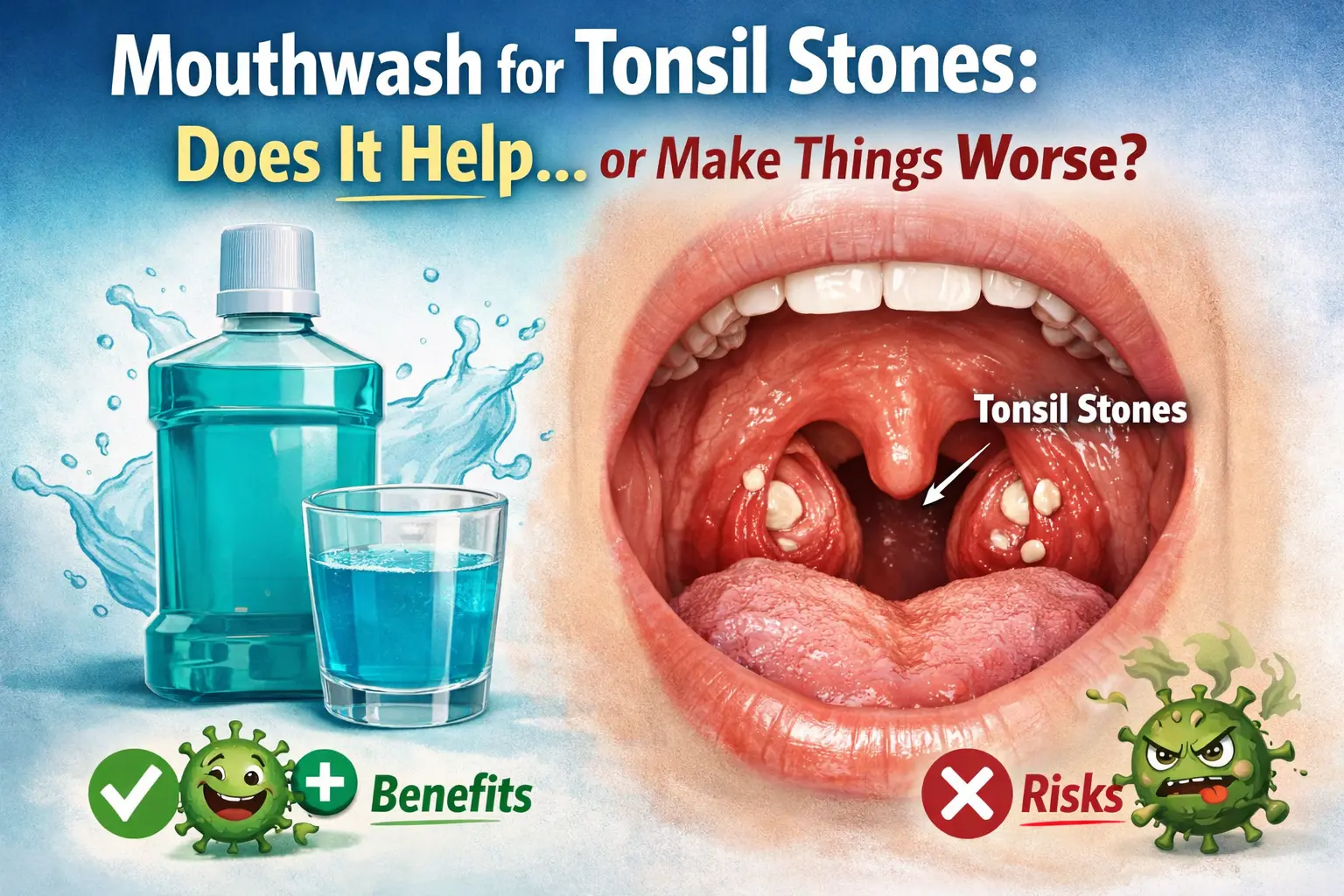
Mouthwash for Tonsil Stones: Does It Help (or Make Things Worse)?
If you’re dealing with tonsil stones, it’s normal to grab mouthwash and hope it fixes everything—especially if bad breath is the main problem. But here’s the truth:
Mouthwash can help with smell and bacteria, but it usually can’t “remove” tonsil stones by itself.
And some mouthwashes can actually make tonsil stones more likely by drying your mouth out.
This guide explains what mouthwash can realistically do, which types are best, which ones to avoid, and a simple routine that fits into a tonsil-stone prevention plan.
Quick Answer
- Mouthwash won’t dissolve most tonsil stones, but it can reduce bacteria and improve breath.
- The best options are alcohol-free mouthwashes, especially those focused on bad breath (volatile sulfur compounds).
- Alcohol-based mouthwash can dry your mouth, making debris stick more and stones recur more often.
- Mouthwash works best when combined with tongue cleaning, hydration, and saltwater gargles.
Why Tonsil Stones Cause Bad Breath (Even After Brushing)
Tonsil stones form when debris (food particles, mucus, dead cells) gets trapped in tonsil crypts and hardens over time. Bacteria feed on that trapped material and can produce sulfur-smelling compounds.
That’s why you can have clean teeth and still feel like your breath comes from “deep in your throat.”
Mouthwash can reduce bacteria in the mouth, but if the odor source is inside the tonsil crypts, mouthwash alone may not fully solve it.
Can Mouthwash Remove Tonsil Stones?
Usually no. Tonsil stones are often partly calcified, meaning they’re hardened with minerals.
Mouthwash can:
- reduce surface bacteria and smell
- lower bacterial load in the mouth
- temporarily improve breath
- support prevention (when used correctly)
Mouthwash usually cannot:
- dissolve stones
- flush deep crypt debris
- prevent recurrence on its own
If you see stones frequently, think of mouthwash as a support tool, not the main solution.
Best Mouthwash Types for Tonsil Stones
Here’s what tends to work best for tonsil-stone-related breath and bacteria issues.
1) Alcohol-Free Mouthwash (Best overall)
Alcohol can dry the mouth. Dry mouth = less saliva. Saliva normally helps wash away debris. So an alcohol-free rinse is the safest everyday choice.
Best for: daily use + prevention
Why it helps: reduces bacteria without increasing dryness
2) Bad Breath Mouthwash (Targets sulfur smell)
Some mouthwashes are designed specifically to reduce the sulfur compounds linked to “tonsil breath.”
Best for: halitosis / stubborn breath
Why it helps: targets the smell chemistry better than generic mouthwash
3) Mild Antiseptic Mouthwash (Short-term use)
Stronger antiseptic rinses can reduce bacteria more aggressively, but they’re not always ideal long term. Overuse can irritate tissues or alter the normal mouth microbiome.
Best for: short periods, flare-ups
Caution: don’t overdo it; if irritation happens, stop
Mouthwash Types to Avoid (or Use Carefully)
1) Alcohol-Based Mouthwash (Common problem)
Alcohol-based rinses can make your mouth feel “clean,” but they can also dry out the mouth and throat, making stones more likely to come back.
Avoid if you:
- wake with dry mouth
- mouth-breathe at night
- get frequent stones
- feel burning/irritation after rinsing
2) Very Strong / Burning Mouthwash
If it burns, it can irritate the back of your throat and tonsils. Irritation can trigger more throat discomfort and doesn’t help stone removal.
3) “Tonsil Stone Dissolver” Claims
Be skeptical of products claiming to “dissolve stones overnight.” In real life, tonsil stones are hardened material and most won’t dissolve quickly.
Best Routine: How to Use Mouthwash for Tonsil Stones
If you want mouthwash to actually help, the order matters.
Daily Routine (Simple)
- Brush teeth (2 minutes)
- Clean tongue (tongue scraper or gentle brushing)
- Rinse with alcohol-free mouthwash (30–60 seconds)
- Hydrate (water after)
Optional Extra (if stones recur)
- Warm saltwater gargle once daily or after meals
- Especially if you feel that “stuck throat” sensation
Tip: If mouthwash makes your mouth feel dry afterward, switch types or reduce frequency.
What Helps More Than Mouthwash (If Stones Keep Returning)
If you’re getting tonsil stones repeatedly, mouthwash is not enough by itself. The bigger drivers are often:
- post-nasal drip (allergies/sinus mucus)
- dry mouth (mouth breathing, dehydration, some meds)
- deep tonsil crypts (anatomy)
- reflux triggers in some people
That’s why the best approach is a full routine, not one product.
Comparison Table: Mouthwash Options for Tonsil Stones
| Mouthwash Type | Helps With | Best For | Watch Out For |
|---|---|---|---|
| Alcohol-free daily rinse | bacteria + breath support | prevention | choose gentle formulas |
| Bad-breath targeted rinse | sulfur smell | halitosis | still won’t remove stones |
| Strong antiseptic rinse | short-term bacteria reduction | flare-ups | irritation if overused |
| Alcohol-based mouthwash | temporary “fresh” feel | rarely ideal | dry mouth → more stones |
When to See a Dentist or ENT
If you’ve improved hygiene and tried safe routines but still have:
- frequent stones
- severe or persistent bad breath
- pain when swallowing
- recurrent tonsillitis
- one-sided swelling
- fever or feeling unwell
…it’s worth seeing a professional. A dentist can rule out dental causes of odor, and an ENT can assess tonsil crypts and discuss options if stones are chronic.
FAQ
Can mouthwash dislodge tonsil stones?
Sometimes it can help loosen small debris, but it usually won’t dislodge a stone that’s embedded.
Should I gargle with mouthwash?
You can gently gargle (without force) with an alcohol-free rinse, but many people do better with warm saltwater gargles for soothing.
Is hydrogen peroxide mouthwash good for tonsil stones?
Some people use it diluted, but it can irritate tissues if too strong. It’s not necessary for most people and should be used cautiously.
What’s the best mouthwash if I have dry mouth?
Choose an alcohol-free rinse and focus more on hydration + saliva support.
“Tonsil stones can feel embarrassing and confusing — especially when bad breath or throat discomfort keeps coming back. That’s why I created the Tonsil Stones Guide eBook: first you’ll understand exactly what’s happening and which symptoms matter, then you’ll read real experiences from others, and finally you’ll get a step-by-step plan: simple home routines + helpful products, plus a clear “doctor path” explaining trusted professional treatments and when they’re considered. Download the eBook“
Looking for a Structured Way to Manage Tonsil Stones?
If you want medically responsible, step-by-step guidance beyond scattered online advice, this complete guide walks you through safe removal methods, prevention strategies, and long-term management. Includes a printable 30-day tracking system.
Explore The Complete Guide → Instant digital download • Professionally designed PDF
![the mystery of tonsil stones [biology]](https://tonsilstones.net/wp-content/uploads/2026/03/The-Mystery-of-Tonsil-Stones-Biology-768x512.webp "The Mystery of Tonsil Stones [Biology]")