how to make tonsil stones fall out
Tonsil stones can be annoying, embarrassing, and sometimes painful — especially when they keep coming back. The good news: many tonsil stones will fall out on their own or with gentle, safe methods that don’t injure your tonsils.
This guide shows you what actually helps, what to avoid, and when it’s time to see a professional.
Quick Answer (Safe Methods That Often Work)
If you want tonsil stones to fall out, start with:
- Warm saltwater gargles
- Hydration + saliva stimulation
- Gentle coughing/throat clearing
- Good oral hygiene + tongue cleaning
- Low-pressure water flosser (carefully)
- Steam / humidifier if your throat is dry
Avoid sharp tools or aggressive poking — that’s how people cause bleeding, infection, or swelling.
Why Tonsil Stones Don’t “Just Fall Out” Sometimes
Tonsil stones form inside tonsil crypts (tiny pockets). Some stones sit near the surface and loosen easily. Others are embedded deeper, or the crypt is narrow, so the stone sticks like a plug.
Your goal is to:
- reduce inflammation and dryness
- loosen the stone
- help your tonsils naturally push it out
Step-by-Step: Make Tonsil Stones Fall Out Today
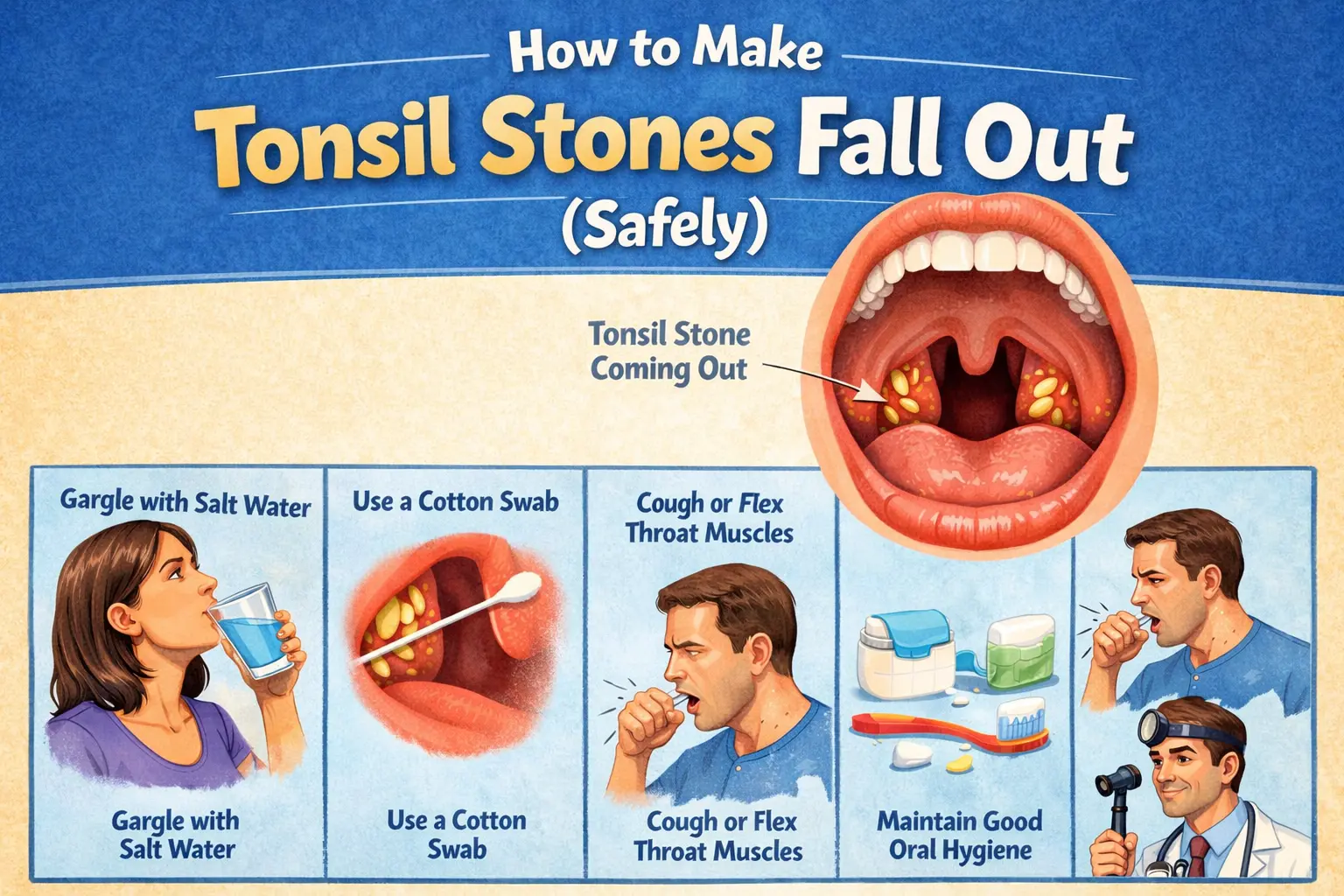
Step 1: Warm Salt Water Gargle (Best First Move)
Saltwater helps:
- loosen debris
- reduce swelling
- flush the crypts
How to do it
- Mix ½ teaspoon salt in 1 cup warm water
- Gargle 20–30 seconds, spit
- Repeat 3–5 times
- Do this 2–4 times/day, especially after meals
Tip: Tilt your head slightly back and aim the gargle toward the tonsil area.
Step 2: Drink Water + Keep Saliva Flowing
Dry throat = sticky mucus = stones that cling.
Do this
- Sip water all day (don’t chug once)
- Try sugar-free gum or xylitol mints
- Avoid too much caffeine/alcohol if they dry you out
Step 3: Gentle Coughing / “Huff Cough”
Sometimes tonsil stones pop out when you create pressure from the throat.
Try this
- Take a deep breath
- Do a controlled “huff” cough (like fogging a mirror)
- Repeat a few times, then stop
Don’t force it for minutes — too much coughing irritates the tonsils and makes things worse.
Step 4: Brush + Tongue Clean (This Helps Stones Loosen)
The goal is to reduce the bacteria + debris that feed stones and make the crypts gunky.
Do this daily
- Brush teeth 2x/day
- Floss 1x/day
- Scrape or brush your tongue
- Rinse after meals if you can
Step 5: Steam or Warm Shower (Underrated)
If your throat feels dry or irritated, steam can soften mucus and help stones loosen.
- Inhale steam from a bowl (careful) or take a warm shower
- Then do a saltwater gargle right after
Step 6: Water Flosser on LOW (Only If You’re Careful)
A water flosser can flush stones out — but high pressure can hurt you.
Safe rules
- Use lowest pressure
- Use warm water
- Aim gently near the tonsil crypt, not deep inside
- Stop immediately if pain or bleeding happens
If you have a strong gag reflex, skip this step and stick to gargles/hydration.
Methods People Try (Ranked by Safety + Results)
| Method | Works? | Safety | Notes |
|---|---|---|---|
| Saltwater gargle | High | Very safe | Best first step |
| Hydration + gum | Medium | Very safe | Helps prevention + loosening |
| Gentle cough/huff | Medium | Safe | Don’t overdo it |
| Tongue cleaning | Medium | Very safe | Helps breath + recurrence |
| Low-pressure water flosser | Medium-High | Medium | Only gentle settings |
| Cotton swab pressure | Sometimes | Medium-Low | Easy to injure tissue |
| Sharp tools / picking | Not worth it | Dangerous | Bleeding/infection risk |
What NOT to Do (Seriously)
Avoid these even if you’re desperate:
- Toothpicks, pins, tweezers, metal tools
- Aggressive poking
- Hard scraping
- High-pressure water blasting
- Over-gagging yourself to try to “push” stones out
Even small injuries inside the tonsil can swell, bleed, or get infected — and that often turns a small stone problem into a real medical problem.
When Tonsil Stones Won’t Fall Out
Some stones don’t come out easily because:
- they’re deeply embedded
- the crypt is very narrow
- the tonsil is swollen from irritation/infection
- there’s scar tissue from repeated tonsillitis
If you keep feeling “something stuck,” but nothing comes out after safe attempts, that’s a sign to stop forcing it and get checked.
When to See a Doctor (Red Flags)
Get professional help if you have:
- severe one-sided throat pain
- fever or feeling sick
- trouble swallowing or breathing
- persistent bleeding
- large swelling on one side
- symptoms that keep returning for months
Often, an ENT is best for recurrent stones or tonsil issues. A dentist is helpful for ruling out gum disease, decay, or other breath causes.
FAQs
Can tonsil stones fall out on their own?
Yes. Many fall out while eating, coughing, gargling, or even while sleeping.
How long does it take?
Small surface stones may come out the same day. Deeper stones can take days/weeks — or may need professional removal.
Do mouthwashes help?
Some help with bacteria, but avoid harsh alcohol mouthwashes if they dry you out. Saltwater is usually safer and more effective for the throat.
Tonsil stones can feel embarrassing and confusing — especially when bad breath or throat discomfort keeps coming back. That’s why I created the Tonsil Stones Guide eBook: first you’ll understand exactly what’s happening and which symptoms matter, then you’ll read real experiences from others, and finally you’ll get a step-by-step plan: simple home routines + helpful products, plus a clear “doctor path” explaining trusted professional treatments and when they’re considered. Download the eBook
Looking for a Structured Way to Manage Tonsil Stones?
If you want medically responsible, step-by-step guidance beyond scattered online advice, this complete guide walks you through safe removal methods, prevention strategies, and long-term management. Includes a printable 30-day tracking system.
Explore The Complete Guide → Instant digital download • Professionally designed PDF![the mystery of tonsil stones [biology]](https://tonsilstones.net/wp-content/uploads/2026/03/The-Mystery-of-Tonsil-Stones-Biology-768x512.webp "The Mystery of Tonsil Stones [Biology]")