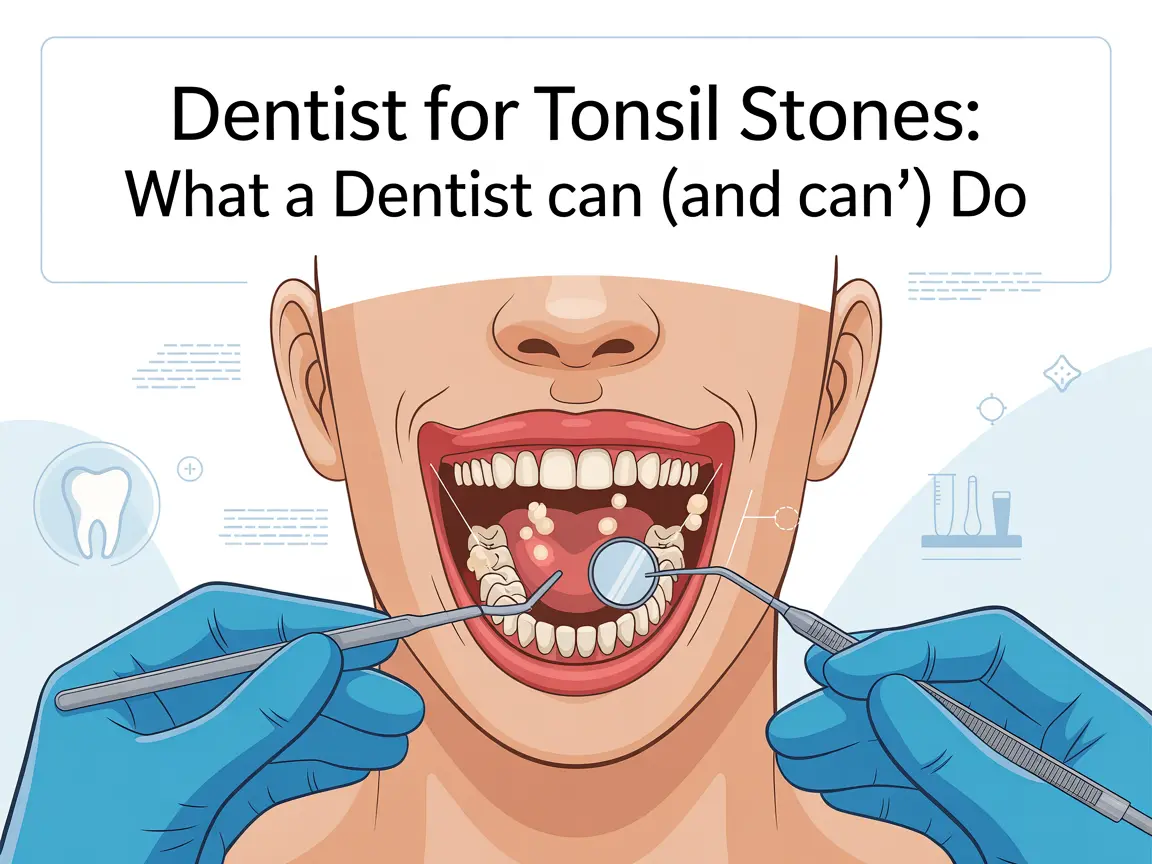
Dentist for Tonsil Stones: What a Dentist Can (and Can’t) Do
Tonsil stones can be frustrating—especially when bad breath, a “stuck” feeling, or throat irritation keeps coming back. If you’re searching “dentist for tonsil stones,” you’re probably asking one thing: Should I see a dentist, or do I need an ENT? This guide gives you a clear, safe path without overcomplicating it.
Quick Answer
- Yes, a dentist can help if your main problem is bad breath and you’re not sure whether it’s tonsil stones, gum disease, tongue buildup, or cavities.
- Dentists may be able to spot visible stones, rule out dental causes, and guide safer next steps.
- ENT is usually best for recurrent stones, deep crypts, frequent tonsillitis, or one-sided swelling.
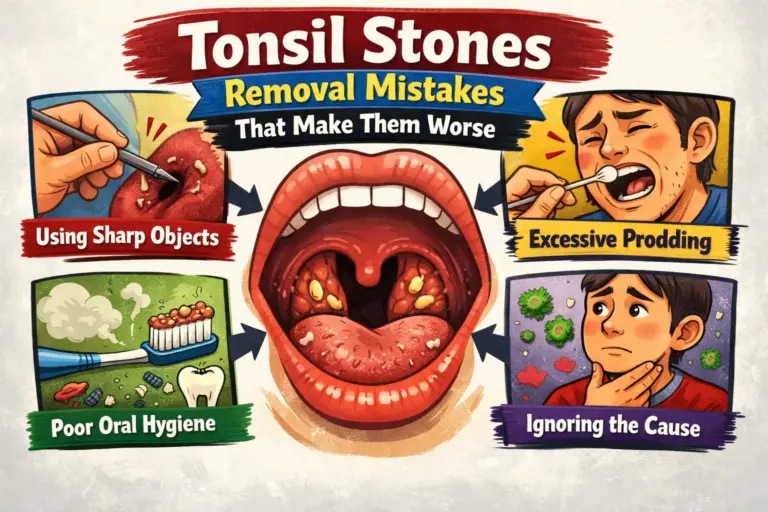
- Don’t use sharp tools to dig stones out—tonsil tissue bleeds easily.
- Seek urgent care for trouble breathing, severe one-sided swelling, high fever, or inability to swallow liquids.
Why People Think It’s “Tonsil Stones”… but It’s Sometimes Dental
Bad breath and throat discomfort can come from different places, and the mouth is connected. A dentist is often the fastest first stop when:
- Your breath smells “sulfur/rotten” and mouthwash barely helps
- You have gum bleeding, tartar buildup, or food traps
- You suspect tonsil stones, but you’re not 100% sure
- You want a professional to check the whole mouth + throat area safely
A dentist can often tell the difference between:
- Gum disease breath (often metallic, inflamed gums, bleeding)
- Tongue coating (white film, worse in the morning)
- Cavities/decay (localized smell/taste, tooth sensitivity)
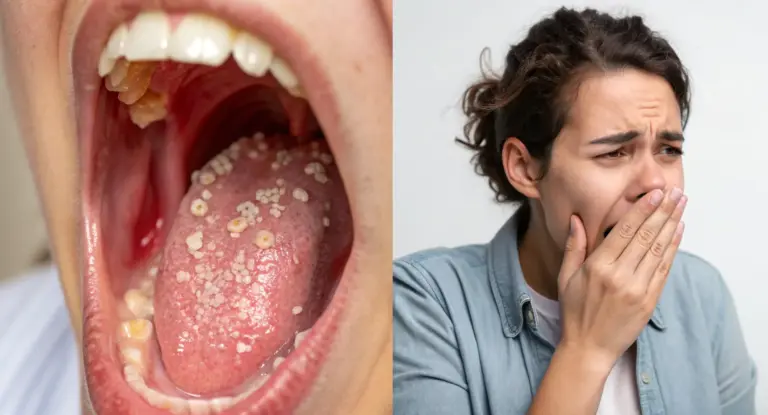
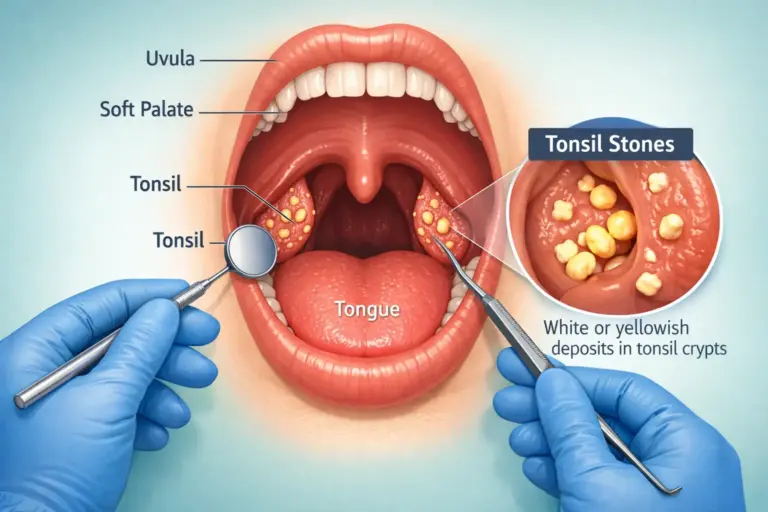
- Tonsil stones (white/yellow bits in tonsil crypts, “something stuck” feeling, recurring)
Can a Dentist Remove Tonsil Stones?
Sometimes—but it depends on the situation and the provider.
A dentist may help if:
- The stone is small and clearly visible
- It’s sitting near the surface
- You mainly need help with diagnosis + hygiene plan
- Your gag reflex is manageable
A dentist may not be the right person if:
- Stones are deep, frequent, or very painful
- You have recurrent tonsillitis
- One tonsil looks much larger than the other
- You’re dealing with chronic throat symptoms that aren’t improving
In those cases, an ENT (Ear, Nose & Throat specialist) is usually the best fit.
What a Dentist Will Do at the Appointment
Here’s what to expect at a typical visit when you bring up tonsil stones:
1) Rule out common mouth causes of bad breath
A good dentist will check:
- Gum health (pockets, inflammation, bleeding)
- Plaque/tartar levels
- Cavities or cracked teeth
- Tongue coating and dryness
- Dental appliances (retainters/dentures can trap odor)
2) Look for visible stones and tonsil irritation
Some dentists will visually inspect the tonsils (as far as is comfortable) and note:
- White/yellow debris
- Redness/inflammation
- Signs that suggest infection vs irritation
3) Give safer next steps (without trauma)
Most reputable providers will emphasize:
- Don’t dig aggressively
- Focus on oral hygiene + gentle rinsing
- Consider ENT if recurrent
Dentist vs ENT: Who Should You See?
Use this simple decision guide:
Start with a dentist if…
- Your main complaint is bad breath
- You haven’t had a dental checkup in 6–12 months
- You suspect gums, tongue, or cavities might be involved
- Stones are occasional and symptoms are mild
Go straight to an ENT if…
- Stones are recurring (weekly/monthly) and annoying
- You get frequent tonsillitis or repeated throat infections
- You have a persistent “lump”/stuck feeling
- One tonsil is noticeably larger or painful on one side
- You’re considering longer-term options for crypts or chronic problems
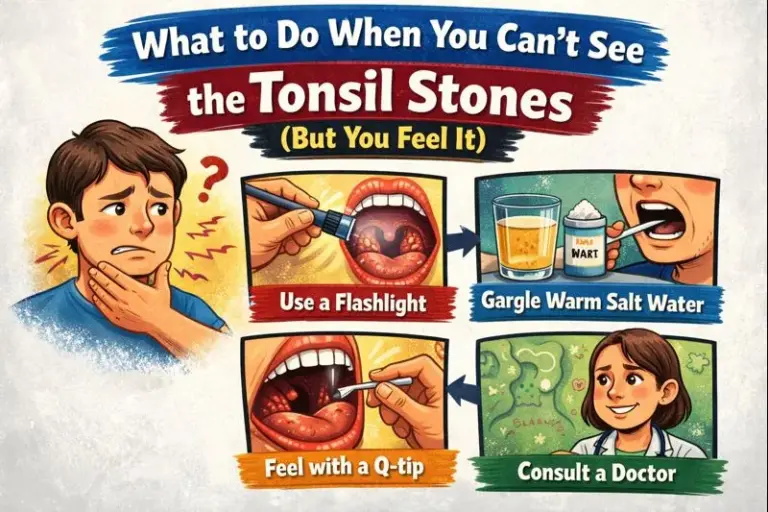
Safe Steps You Can Do Today (Without “Digging”)
These are gentle, low-risk steps that help many people—without turning your throat into a DIY project:
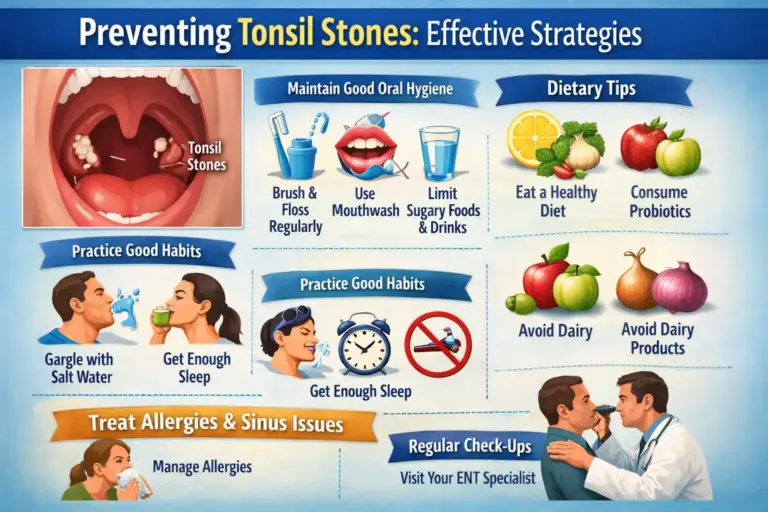
Saltwater gargle
A warm saltwater gargle can help loosen debris and calm irritation. Keep it gentle—no aggressive gargling that triggers pain.
Hydration and dry-mouth support
Dry mouth can make debris stick more easily. Sip water regularly, especially after coffee or a dry meal.
Tongue cleaning
A tongue scraper (or gentle brushing of the tongue) can reduce odor-causing buildup and helps you separate “mouth breath” from “tonsil breath.”
Avoid sharp tools
No pins, metal picks, tweezers, or anything that can puncture tissue. Bleeding + swelling makes everything worse.
(If you want the full step-by-step home routine with the exact order, frequency, and what to use—this is inside the ebook so you don’t have to guess.)
Red Flags: Get Medical Help Urgently
Don’t “wait and see” if you have:
- Difficulty breathing
- Drooling or can’t swallow liquids
- High fever with severe throat pain
- Rapidly worsening one-sided swelling
- Muffled “hot potato” voice
- Neck swelling or severe pain
- Blood you can’t easily explain
These can be signs of something more serious than tonsil stones.
What to Ask a Dentist (So You Get a Useful Answer)
You can literally copy/paste these questions:
- “Can you check if my bad breath is from gums, tongue, cavities, or tonsils?”
- “Do you see visible tonsil stones or tonsil debris?”
- “Is there gum disease or deep pockets that could explain odor?”
- “Should I see an ENT based on what you’re seeing today?”
- “What’s the safest routine to reduce recurrence?”
FAQs
Can a dentist diagnose tonsil stones?
They can often suspect or see visible stones, and they can definitely help rule out dental causes of odor. Deep stones may need ENT evaluation.
Can cleaning my teeth stop tonsil stones?
Good hygiene can reduce the “fuel” (bacteria + debris), but tonsil crypt anatomy also matters. Some people do everything right and still get them.
Do tonsil stones mean I have an infection?
Not always. Tonsil stones can happen without active infection. But if you have fever, worsening pain, or pus, get checked.
If I keep getting them, what’s the next step?
Usually ENT for recurrent cases—especially if it’s impacting your quality of life.
Tonsil stones can feel embarrassing and confusing — especially when bad breath or throat discomfort keeps coming back. That’s why I created the Tonsil Stones Guide eBook: first you’ll understand exactly what’s happening and which symptoms matter, then you’ll read real experiences from others, and finally you’ll get a step-by-step plan: simple home routines + helpful products, plus a clear “doctor path” explaining trusted professional treatments and when they’re considered. Download the eBook
Looking for a Structured Way to Manage Tonsil Stones?
If you want medically responsible, step-by-step guidance beyond scattered online advice, this complete guide walks you through safe removal methods, prevention strategies, and long-term management. Includes a printable 30-day tracking system.
Explore The Complete Guide → Instant digital download • Professionally designed PDF